Periodization
Specializing in One Lift
all levels · strength, hypertrophy, powerlifting
Updated
How this document is used
This is one of the 44 documents the phase.fitness generator reads before writing a phase. It receives the principles below as context, and the numbers in it become the bands a generated program has to respect. The references at the end are stripped from the prompt — the model is not allowed to cite studies — and kept here, for you to check.
When an athlete's goal is a single lift — a bigger squat, a heavier bench press, the first strict pull-up — the program stops being a balanced strength program with that lift somewhere inside it. It becomes a program built around that lift, where every other decision is judged by what it does for it.
Three things change: how often the lift is trained, what the rest of each session is for, and what gets reduced to make room. Recovery does not change. The extra work on one lift has to come out of the same weekly budget, so specialization is always a trade, never an addition.
What specialization changes, and what it does not
A general strength program spreads its weekly capacity across patterns: knee-dominant and hip-dominant lower body, horizontal and vertical pushing and pulling. A specialization block tilts that budget toward one lift for a limited time.
What changes:
- The target lift is trained more often, two or three times a week instead of once.
- Accessory work is chosen for that lift: the muscles and positions that limit it, rather than a generic spread of patterns.
- Everything else moves to maintenance: fewer sets, kept heavy enough to hold on to strength.
What does not change:
- Total weekly stress still has to be recoverable. Adding sets to the squat without removing anything elsewhere is the most common way a specialization block fails.
- The other patterns still appear in the week. Balance becomes a weekly question rather than a per-session one: a squat-focused week still contains a hinge, a press and a pull, just not in every session.
Frequency: expose the lift more often
Train the target lift two or three times a week. Most of the extra strength that comes from higher frequency is explained by the extra volume it allows rather than by frequency itself. But for multi-joint lifts, splitting the weekly sets across more sessions keeps each set fresher, and every exposure is also practice of a skill.
A practical shape for two or three exposures:
- One heavy exposure of the lift itself: fewer repetitions, higher intensity, effort usually capped by RPE so the session can be repeated next week.
- One exposure with a close variation, chosen for where the lift fails, at moderate intensity and more repetitions.
- A third, lighter exposure when recovery allows: technique work or back-off sets, well short of failure.
With two gym days a week, the lift appears on both: once as the lift, once as its variation. The deadlift is the exception. Its systemic cost makes it tolerate frequency poorly, so a deadlift focus usually keeps one heavy pull a week and adds a lighter hinge variation on another day.
Weekly sets on the target lift
Count the lift and its close variations together. The ranges this knowledge base uses for a primary lift apply: roughly 8–12 hard sets a week for beginners, 12–18 for intermediates and 15–25 for advanced lifters. A specialization block works in the upper half of the athlete's range; a general program sits in the lower half.
Spread the sets instead of stacking them. Three to five working sets of the lift on the heavy day, three to five of the variation on another day, and a third exposure when the athlete trains three or more days: that reaches the intermediate range without any session becoming a marathon of one movement.
Choosing the variation
Choose the variation by where the lift fails, not by novelty.
- Squat: pause squats when the lift slows out of the bottom; front squats when the upper back folds and the torso tips forward — they load the legs heavily with less compressive stress on the spine; box squats to control depth and drive from the hips.
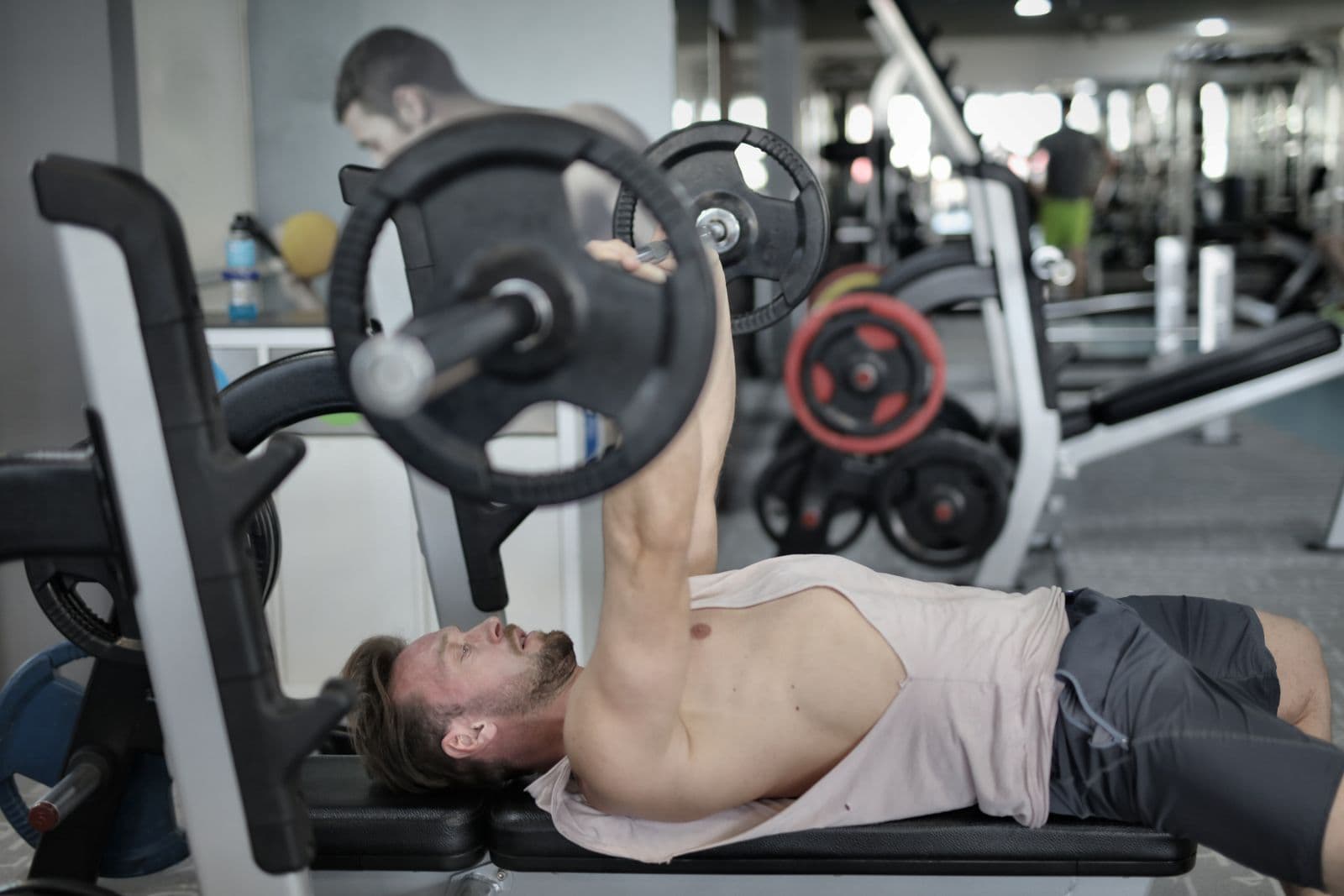
- Bench press: a paused bench for strength off the chest; close-grip bench or floor press for the lockout and the triceps; incline bench for the shoulders and upper chest.
- Deadlift: Romanian deadlifts for the hamstrings and the hinge position; a pause just below the knee for the position off the floor; the opposite stance, sumo or conventional, for high carryover with a different stress.
- Overhead press: push press to handle heavier loads overhead; seated pressing to take the legs out; close-grip or incline pressing for the triceps and upper chest.
- Pull-up: weighted pull-ups once bodyweight sets are strong; slow negatives and assisted sets to build volume before the first strict repetition; scapular pull-ups for the start of the pull.
Keep the chosen variation for the whole block, usually four to six weeks, so it can progress. Changing it every week removes the overload that makes it useful.
Accessories serve the lift
After the lift and its variation, pick accessories for the muscles and positions that limit the lift, not to tick every pattern in every session.
- Squat: quadriceps (leg press, split squats, leg extensions), trunk bracing and upper back. The hinge is supportive: one moderate hip-hinge exercise a week — a Romanian deadlift or a good morning — is enough, placed away from the heaviest squat day. The same hinge on both lower-body days adds fatigue to the lower back without making the squat stronger.
- Bench press: triceps, shoulders, and the upper back and lats that make a stable base.
- Deadlift: hamstrings and glutes, upper back and grip. Heavy squatting moves to maintenance.
- Overhead press: triceps, upper back and the trunk that keeps the ribs down.
- Pull-up: lats and upper back through pulldowns and rows, biceps, grip and body tension.
What to reduce to make room
Specialization works only if something gives. The other lifts move to maintenance. Strength can be kept for months on a small fraction of the volume that built it, as long as the work stays heavy; older lifters need a larger fraction than younger ones.
In practice, each non-target lift keeps one heavy exposure a week with a few working sets, and accessory volume for muscles unrelated to the target lift is the first thing to trim.
Order within the session
The target lift goes first in its sessions, straight after the warm-up, while the athlete is fresh. Exercises performed at the start of a session receive more of the training effect than the same exercises performed later. On days without the lift itself, its variation or the most closely related accessory takes the first slot.
Length of a block, and what comes after
A specialization block usually lasts three to six weeks, sometimes two blocks back to back with a lighter week between them. Longer than that, fatigue on one pattern accumulates and the maintained lifts start to slip. At the end of the block the lift is tested or estimated from recent heavy sets, and the next block either keeps the focus with a new variation or returns to a balanced distribution.
Beginners
For a beginner, specialization mostly means practicing the target lift more often with good technique: two or three sessions a week, a few sets at moderate effort, and steady load increases. Weak-point variations matter less, because the whole lift is still improving at once. A beginner's best variation is usually the lift itself, performed with better positions.
References
- American College of Sports Medicine. (2009). Progression models in resistance training for healthy adults. Medicine & Science in Sports & Exercise, 41(3), 687-708.
- Grgic, J., Schoenfeld, B. J., Davies, T. B., Lazinica, B., Krieger, J. W., & Pedisic, Z. (2018). Effect of resistance training frequency on gains in muscular strength: a systematic review and meta-analysis. Sports Medicine, 48(5), 1207-1220.
- Colquhoun, R. J., et al. (2018). Training volume, not frequency, indicative of maximal strength adaptations to resistance training. Journal of Strength and Conditioning Research, 32(5), 1207-1213.
- Ralston, G. W., Kilgore, L., Wyatt, F. B., & Baker, J. S. (2017). The effect of weekly set volume on strength gain: a meta-analysis. Sports Medicine, 47(12), 2585-2601.
- Fonseca, R. M., et al. (2014). Changes in exercises are more effective than in loading schemes to improve muscle strength. Journal of Strength and Conditioning Research, 28(11), 3085-3092.
- Gullett, J. C., Tillman, M. D., Gutierrez, G. M., & Chow, J. W. (2009). A biomechanical comparison of back and front squats in healthy trained individuals. Journal of Strength and Conditioning Research, 23(1), 284-292.
- Simão, R., de Salles, B. F., Figueiredo, T., Dias, I., & Willardson, J. M. (2012). Exercise order in resistance training. Sports Medicine, 42(3), 251-265.
- Bickel, C. S., Cross, J. M., & Bamman, M. M. (2011). Exercise dosing to retain resistance training adaptations in young and older adults. Medicine & Science in Sports & Exercise, 43(7), 1177-1187.
- Zourdos, M. C., et al. (2016). Modified daily undulating periodization model produces greater performance than a traditional configuration in powerlifters. Journal of Strength and Conditioning Research, 30(3), 784-791.
- Helms, E. R., Cronin, J., Storey, A., & Zourdos, M. C. (2016). Application of the repetitions in reserve-based rating of perceived exertion scale for resistance training. Strength and Conditioning Journal, 38(4), 42-49.