Sport performance
Hyrox training plan: running, stations and strength in one week
Hyrox is a pacing problem built on strength, an aerobic base and grip, and phase.fitness plans all three in one week — the exact case its hybrid-fitness document was written for, and the one a running app or a lifting app cannot hold on its own.
Updated
- Level
- Intermediate
- Length
- 10–16 weeks
- Days per week
- 5–6
- Modalities
- StrengthCardioCalisthenics
- Equipment
- A rack, a sled, a ski erg or rower, kettlebells or sandbags, a road for the running
- Sessions go to
- Garmin, Intervals.icu, Strava, Hevy
The short answer
A Hyrox plan in phase.fitness keeps 2–3 heavy strength sessions a week at 3–5 sets of 3–5 reps on squat, hinge, press and pull, an aerobic base of 1–2 low-intensity sessions of 45–70 minutes, grip and carry work twice a week progressed by distance and time before load, and from 8–10 weeks out a weekly race-pace session with the actual movements in the actual order and the transitions rehearsed. Threshold efforts run 8–20 minutes, VO2max 3–5 minutes at most once a week. Two weeks out volume drops ~40% with intensity held; one week out 60%, keeping two short race-pace efforts and removing anything novel or heavily eccentric.
A pacing problem, not a capacity problem
The hybrid-fitness document phase.fitness reads says most Hyrox athletes do not lose because they lack capacity; they lose because they spent it in the wrong place. So the plan's centrepiece from 8–10 weeks out is a weekly race-pace rehearsal — the actual movements, in the actual order, at the intensity you intend to hold, with the transitions practised — as calibration rather than exhaustion. A session where you blow up has taught you your pace was wrong, which is useful once.
The interference effect is real and mostly one-directional: endurance work costs strength more than the reverse, and it lands hardest when the sessions sit next to each other. The phase.fitness ordering rules come straight from the document — never two hard sessions of the same quality on consecutive days, never a hard conditioning session right before a heavy strength day, grip work at the end of a session because it compromises everything after it. Strength volume is what gets cut as race prep intensifies; strength intensity is held, because it is lost quickly and regained slowly.
How do you train grip for Hyrox?
Twice a week, at the end of the session, and progressed by distance and time before load. phase.fitness programs farmers and suitcase carries plus hangs, and keeps them last on purpose: grip work compromises everything that comes after it, which is exactly what happens to you on race day.
Can you build strength and run at the same time for Hyrox?
Yes, if the week is ordered. Endurance work costs strength more than the reverse, and worst when the sessions sit next to each other, so phase.fitness never puts two hard sessions of the same quality on consecutive days and never a hard conditioning session right before a heavy strength day.
What phase.fitness builds
A program is a sequence of phases, each with a job. These are the phases phase.fitness writes for this case, with the bands the generator has to respect — transcribed from the document it reads, not invented for this page.
Base
4–6
Build
4–6
Taper
2
| Phase | Weeks | Job | Band |
|---|---|---|---|
| Base | 4–6 | Strength backbone, aerobic base, grip | Strength 2–3×/week 3–5 × 3–5; aerobic 1–2 × 45–70 min Z2; carries and hangs 2×/week by distance and time |
| Build | 4–6 | Race-pace rehearsals weekly; conditioning intensities | Race-pace session 1×/week; threshold 8–20 min efforts; VO2max 3–5 min ≤1×/week; anaerobic 30–90 s rarely; strength volume trimmed, intensity held |
| Taper | 2 | Arrive fresh, pacing calibrated | −40% volume two weeks out, −60% one week out; two short race-pace efforts; no novel movements, no heavy eccentrics |
A sample week
One week from the first phase, as it would sit on the calendar. Your own week follows the days you say you have — 5–6 here — and the equipment you list.
- SStrength
- CCardio
- KCalisthenics
- Rest
| Day | Modality | Session |
|---|---|---|
| Mon | S | Heavy lower: squat 4 × 4, hinge 3 × 5; short sharp conditioning after |
| Tue | C | Aerobic base 50–60 min Z2; low-intensity skill practice on the stations |
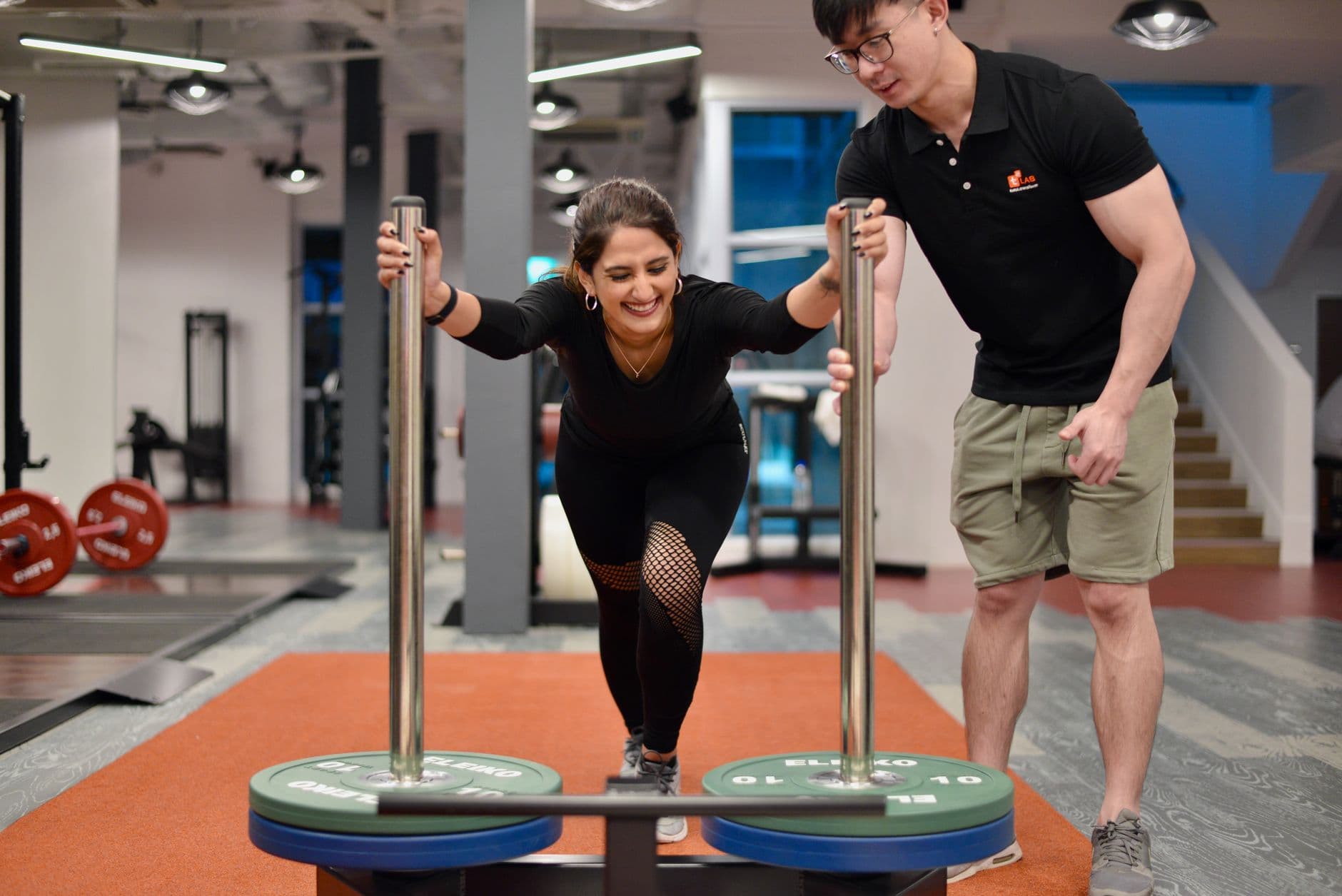
| Wed | S | Power: trap-bar jumps, sled pushes; race-pace intervals 4 × (1 km run + a station) |
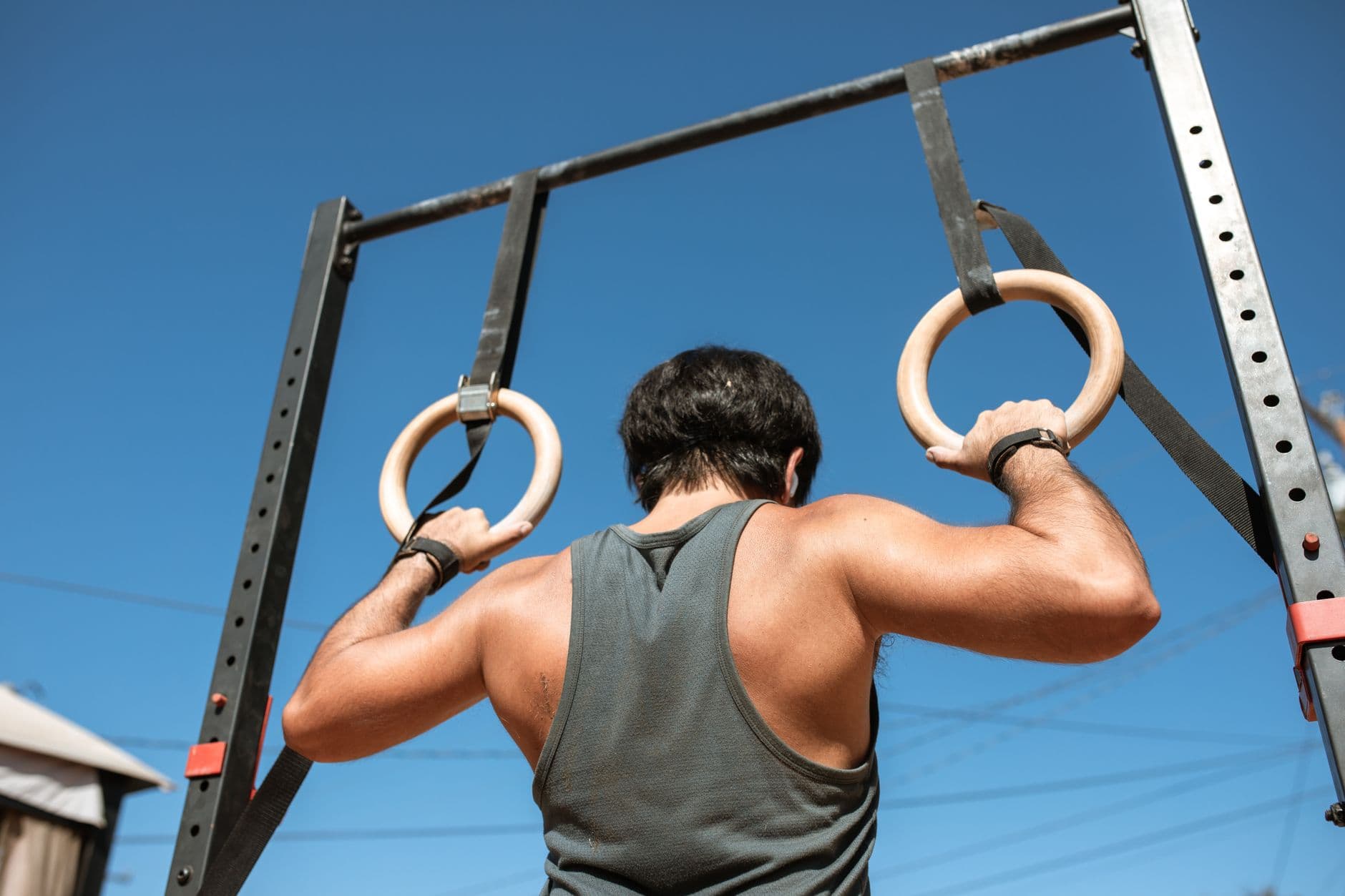
| Thu | K | Rest day of the barbell: hangs, L-sit and hollow holds, pull-up progression, mobility |
| Fri | S | Heavy upper/full: press 4 × 4, weighted pull-ups; farmers and suitcase carries at the end |
| Sat | C | Long mixed-modal session at race pace: runs and stations in order, transitions rehearsed |
| Sun | Rest | — |
S = strength · C = cardio · K = calisthenics. The order is the point: hard days are kept apart and the long session gets the clean slot.
How it adapts when a phase ends
phase.fitness reads the runs and the race-pace sessions from Garmin or Intervals.icu — pace, heart rate, duration — and the strength from Hevy, Liftosaur or the watch. Garmin activities are read only if you allow it. When a phase ends, the plan compares the base minutes actually run with the plan (the base is the most skipped item in hybrid training, and the one that most reliably improves race times) and holds the build until it is there. If the strength log shows the main lifts held their intensity while volume fell, that is the trade working; if intensity slid, the next phase moves the heavy days further from the hard conditioning.
Where the sessions go
phase.fitness plans; you train in the app or on the watch you already use, and the completed session comes back. For this program:
What phase.fitness does not do here
phase.fitness writes the strength and cardio sessions and orders the week; the station-specific skill work — sled technique, wall-ball rhythm, ski-erg mechanics — is practised at low intensity on your aerobic days, and phase.fitness counts it rather than coaching it. Hyrox reaches a Garmin watch as generic cardio.
The evidence
The documents this page is built from
These are the knowledge-base documents the phase.fitness generator reads for this case. The phases, bands and weekly numbers above are transcribed from them.
- Concurrent Training for Hybrid Fitness Racing — updated 2026-10-11, hybrid fitness
- Physiological Optimization for Long-Distance Performance — updated 2026-02-21, endurance
- Strength Training Basics — updated 2025-01-07
Frequently asked questions
How many days a week is a Hyrox plan?
Five or six in a phase.fitness plan: 2–3 heavy strength sessions, 1–2 aerobic base sessions of 45–70 minutes, a power or race-pace interval day, a long mixed-modal session at race pace, and a calisthenics day for grip and trunk — ordered so that no two hard sessions of the same quality fall on consecutive days.
When do race-pace sessions start?
phase.fitness starts them 8–10 weeks out, weekly, as the hybrid-fitness document prescribes: the actual race movements in the actual order at the intended intensity, with the transitions rehearsed. The purpose is calibration, not exhaustion.
What does the taper look like?
In the phase.fitness taper: two weeks out, volume cut by roughly 40% with intensity held; one week out, volume cut 60%, two short race-pace efforts kept, all novel movements and heavy eccentric work removed.
Is this the same as a hybrid athlete plan?
It is the race-specific version of one. phase.fitness plans strength, cardio and calisthenics in the same week for anyone; a Hyrox plan adds the stations, the grip work and the race-pace rehearsals the document describes.
The only app that plans strength, cardio and calisthenics together
For a Hyrox athlete the calisthenics day is grip, hanging strength and trunk endurance — hangs, L-sit and hollow holds, pull-up progressions — the qualities the sled, the carries and the wall balls all draw on, trained without adding to the running or lifting load.
Right now, phase.fitness is the only training app that writes strength, cardio and calisthenics into one periodized program — same calendar, same phases, same recovery budget.
You choose the mix. A calisthenics-only plan, a cardio-only block, strength plus cardio, or all three: the phases, the end-of-phase analysis and the sync work the same way with one modality or three.
Why calisthenics is in the plan
Bodyweight skill work is strength training in a different shape. Straight-arm work, levers and handstands build scapular control, tendon capacity and relative strength that barbell and machine work leave untouched, and they transfer because they are closed-chain, whole-body patterns. Treated as a modality rather than a warm-up, they get sets, holds and progressions like a squat does.
No exercise catalogue on the market contains a tuck front lever, so those sessions run in the phase.fitness built-in player; strength goes to Hevy, Liftosaur or a Garmin watch, cardio to Garmin and Intervals.icu. How the skill work is programmed.
Free to start, no card. The first phase is yours to keep whatever you decide.