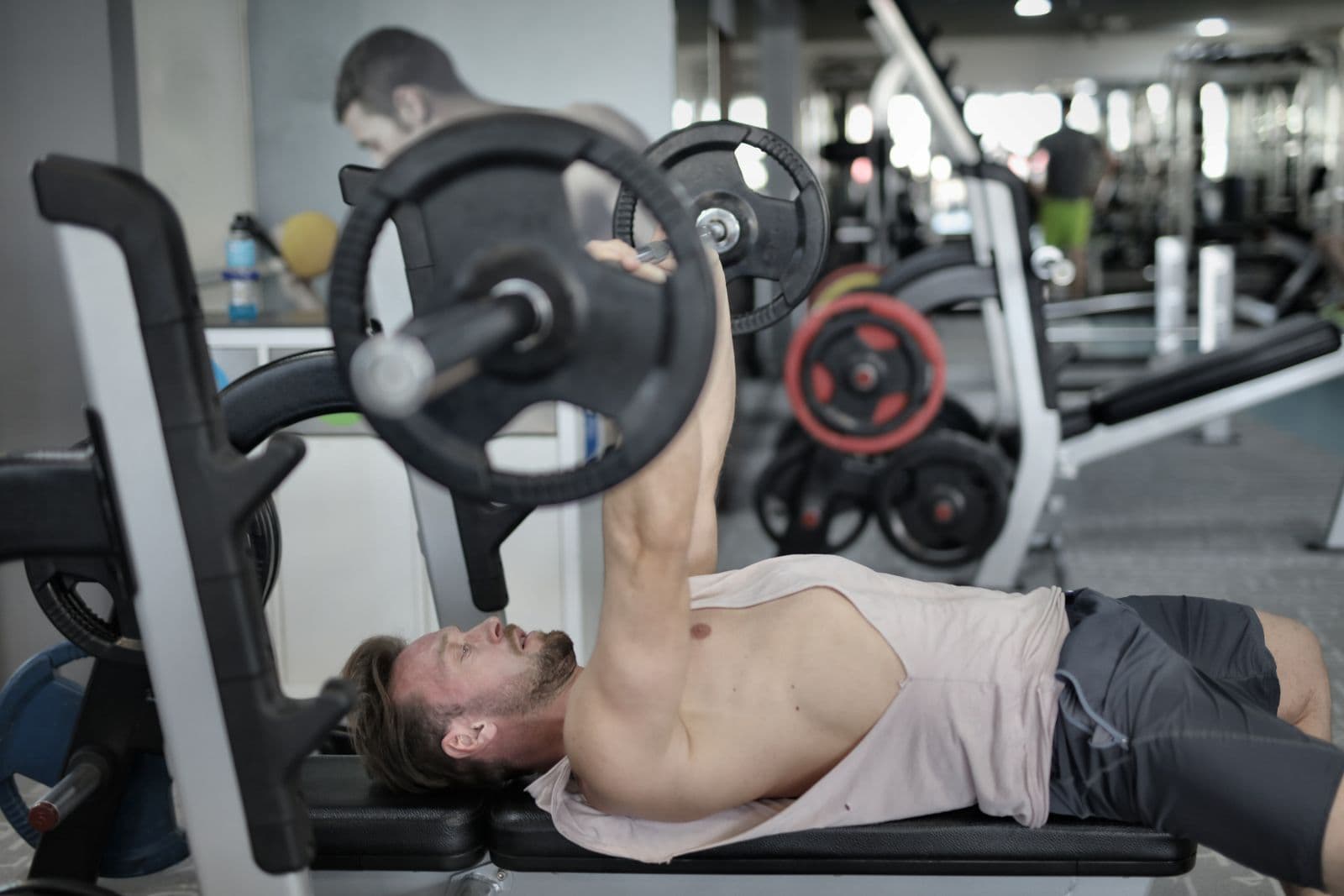
Exercise selection
Loads for Lift Variations
all levels · strength, hypertrophy, powerlifting
Updated
How this document is used
This is one of the 44 documents the phase.fitness generator reads before writing a phase. It receives the principles below as context, and the numbers in it become the bands a generated program has to respect. The references at the end are stripped from the prompt — the model is not allowed to cite studies — and kept here, for you to check.
A percentage of one-repetition maximum only means something against the right maximum. A lifter who back squats 100 kg does not front squat 100 kg, and a front squat prescribed "at 65%" of the back squat asks for a much harder effort than 65% of the front squat. This document gives the ratios between the main barbell lifts and their common variations, so that a variation's load can be estimated from the parent lift's confirmed maximum.
Why variations need their own maximum
Variations change leverage, range of motion, stability demands or the muscles that limit the lift. Each of those changes moves the heaviest load the athlete can handle:
- Torso angle and bar position. The front squat keeps the torso upright and the bar in front of the neck. The quadriceps and the upper back limit it long before the hips do, so it is lighter than the back squat.
- Bench angle. An incline shifts the work toward the upper chest and the front of the shoulder, which produce less force than the whole chest in the flat position.
- Grip width. A narrow grip reduces the chest's contribution and puts more of the lift on the triceps.
- Stability. Two dumbbells must be controlled independently. Their combined load is lower than a barbell's, and each dumbbell carries roughly two fifths of the barbell maximum.
- Range of motion and starting position. The Romanian deadlift starts from the top and never rests on the floor, so it is lighter than a conventional deadlift. A hexagonal bar keeps the load in line with the body, and most lifters handle more with it than with a straight bar.
When a variation is loaded as if it were the parent lift, the first sessions are harder than planned. A set prescribed at a moderate effort turns into a set near failure, and the progression starts from a number the athlete cannot repeat.
The ratios
Each ratio multiplies the parent lift's maximum. Where the evidence gives a range, the value used sits at the conservative end: an underestimated load shows up as an easy first session and is corrected by effort, an overestimated one shows up as missed repetitions.
| Variation | Parent lift | Ratio | Rule | Basis |
|---|---|---|---|---|
| Incline bench press (barbell) | Bench press | 0.80 | bench: incline |
Competitive bench pressers moved 18.5–21.5% less on an incline bench than flat or declined |
| Decline bench press (barbell) | Bench press | 1.00 | bench: decline |
In the same athletes only the incline was lower than the flat bench; the flat value is kept |
| Close-grip bench press (barbell) | Bench press | 0.90 | bench: close grip |
About 95% of the traditional grip for one repetition, 90–95% for six |
| Narrow-grip bench press (barbell) | Bench press | 0.90 | bench: narrow grip |
Same evidence as the close grip |
| Bench press (dumbbell), per dumbbell | Bench press | 0.40 | bench: dumbbell |
Both dumbbells together reached 17% less than the barbell, about 41% each |
| Incline bench press (dumbbell), per dumbbell | Bench press | 0.32 | bench: incline + dumbbell |
The incline ratio times the dumbbell ratio |
| Decline bench press (dumbbell), per dumbbell | Bench press | 0.40 | bench: decline + dumbbell |
The decline ratio times the dumbbell ratio |
| Front squat | Back squat | 0.80 | squat: front |
Lifters who train both usually front squat 80–85% of their back squat |
| Romanian deadlift (barbell) | Deadlift | 0.70 | deadlift: romanian |
Population standards put it near 80% of the deadlift, coaching ranges between 65% and 85% |
| Trap bar deadlift | Deadlift | 1.05 | deadlift: trap bar |
Trained lifters moved about 8% more with the hexagonal bar |
| Seated overhead press (barbell) | Overhead press | 1.00 | press: seated |
Seated presses reach a higher maximum than standing ones; the standing value is kept |
| Standing military press (barbell) | Overhead press | 1.00 | press: military |
The same lift under another name |
| Overhead press (dumbbell), per dumbbell | Overhead press | 0.45 | press: dumbbell |
Standing dumbbells together reached about 7% less than the standing barbell |
| Seated overhead press (dumbbell), per dumbbell | Overhead press | 0.45 | press: seated + dumbbell |
Seated dumbbells reached about 10% more than standing; the standing value is kept |
How to use a ratio
- Take the parent lift's confirmed maximum, for example a back squat of 100 kg.
- Multiply it by the ratio: a front squat maximum of about 80 kg.
- Read the prescribed percentage against that estimate. Four sets of eight at 65% is 52 kg, rounded to the nearest loadable weight, not 65 kg.
- For dumbbells, the result is the load of one dumbbell.
- Let effort correct the estimate. If the first set lands well below the target effort, the next session goes up; if it lands above, the load comes down before the progression continues.
When a ratio does not apply
Some variations have no dependable ratio, and their loads are better chosen by effort, with RPE or repetitions in reserve:
- Machines, cables and Smith machines. The same pin can mean very different resistance on two machines, depending on pulleys, cams and the weight of the sled.
- Paused, tempo, box and deficit variations. The length of the pause, the tempo and the height of the box or deficit change the load too much for a single number.
- Single-leg and single-arm work, lunges, split squats, goblet squats. Balance limits the load before strength does.
- Variations the lifter has never done. A new movement pattern costs load while the technique settles, sometimes for weeks.
Individual differences
The ratios describe typical lifters, not every lifter. Training history moves them most: someone who has front squatted for years may reach 90% of the back squat, someone who never has may reach 60%. Body proportions matter as well. Long legs and a short torso make the front squat and the conventional deadlift comparatively harder; long arms make the deadlift comparatively easier. Treat the estimate as the starting point of the first week, and let the athlete's logged sets replace it as soon as they exist.
References
- Saeterbakken AH, Mo DA, Scott S, Andersen V (2017). The effects of bench press variations in competitive athletes on muscle activity and performance. Journal of Human Kinetics, 57, 61–71.
- Lockie RG, Callaghan SJ, Moreno MR, et al. (2017). An investigation of the mechanics and sticking region of a one-repetition maximum close-grip bench press versus the traditional bench press. Sports, 5(3), 46.
- Saeterbakken AH, van den Tillaar R, Fimland MS (2011). A comparison of muscle activity and 1-RM strength of three chest-press exercises with different stability requirements. Journal of Sports Sciences, 29(5), 533–538.
- Saeterbakken AH, Fimland MS (2013). Effects of body position and loading modality on muscle activity and strength in shoulder presses. Journal of Strength and Conditioning Research, 27(7), 1824–1831.
- Swinton PA, Stewart A, Agouris I, Keogh JWL, Lloyd R (2011). A biomechanical analysis of straight and hexagonal barbell deadlifts using submaximal loads. Journal of Strength and Conditioning Research, 25(7), 2000–2009. Summarised in Stronger by Science, "Trap bar deadlifts are underrated".
- Load-velocity relationship in the free-weight horizontal and incline bench press (2025). Scientific Reports, PMC12274453. At a 45° incline, recreational lifters showed a much smaller gap, one more reason the ratio sits at the conservative end.
- Fitness Volt, Deadlift vs Romanian Deadlift strength standards: intermediate standards anchored to competition results, where the deadlift is about 124% of the Romanian deadlift.
- Christian Bosse, "Back squat vs front squat ratio": a coaching review of the 80–85% range.
Source note: literature_review_2026_09