Sport-specific
Vertical Endurance and Eccentric Tolerance for Trail Running and Hiking
trail running · all levels · endurance, strength endurance, aerobic power
Updated
How this document is used
This is one of the 44 documents the phase.fitness generator reads before writing a phase. It receives the principles below as context, and the numbers in it become the bands a generated program has to respect. The references at the end are stripped from the prompt — the model is not allowed to cite studies — and kept here, for you to check.
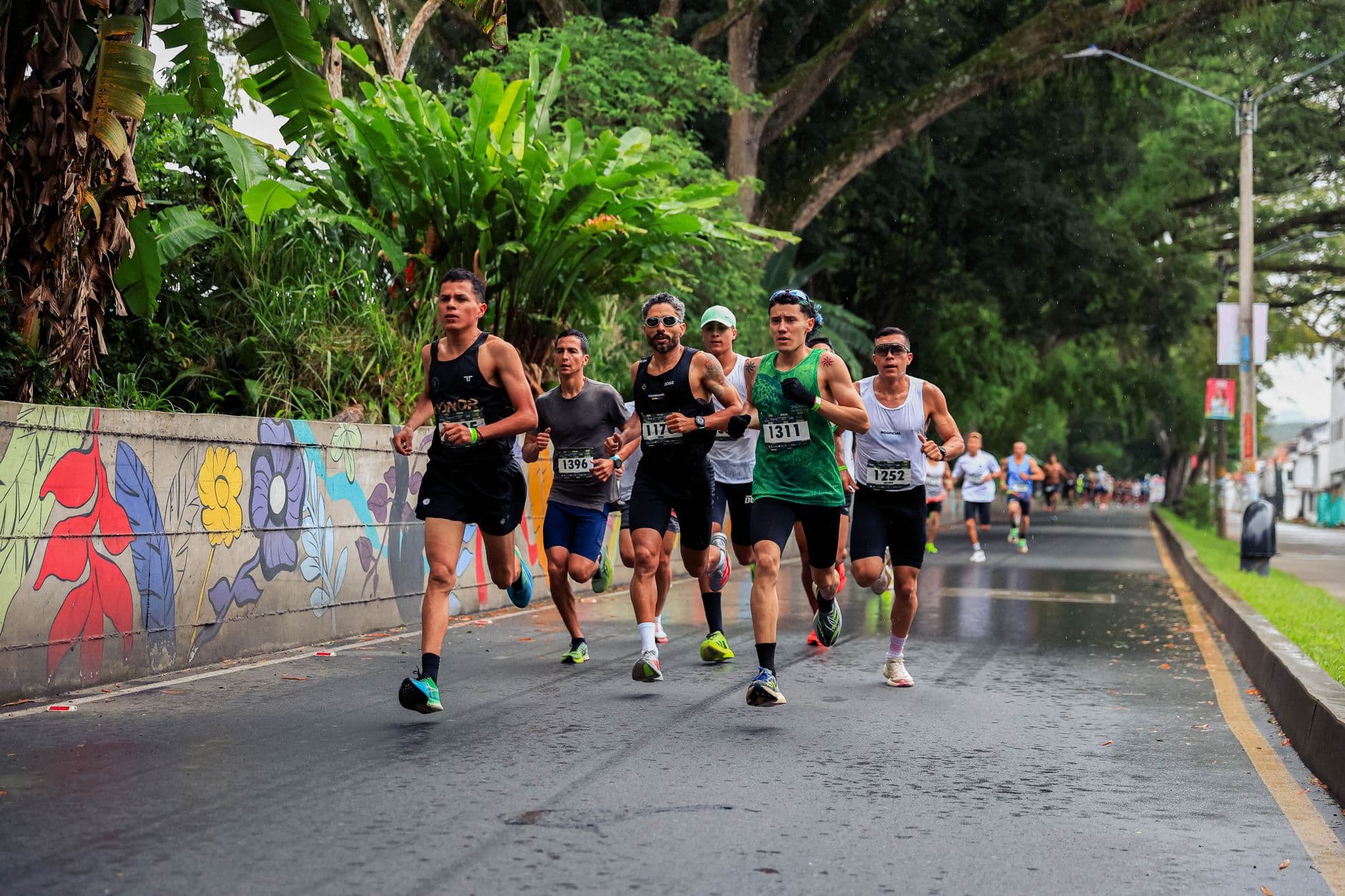
Trail running and mountain hiking differ from road endurance in three ways that change the training plan entirely: the terrain dictates intensity rather than the athlete, the descents cause more damage than the climbs, and the events are long enough that fuelling and pacing are physical qualities in their own right.
An athlete who trains for these on flat ground arrives fit and still fails, usually on the descent of the second major climb.
Key Principles
1. Effort, not pace, is the unit of intensity
On varied terrain, pace is meaningless — the same effort produces four minutes per kilometre on a flat section and fifteen on a steep climb. Training and racing are governed by perceived effort, heart rate, or power, never by pace.
The most common beginner error follows directly from ignoring this: running climbs at a pace that feels reasonable, arriving at the top far above threshold, and paying for it for the next hour.
2. Descending is the damaging half, and it is trainable
Downhill running loads the quadriceps eccentrically at high force for sustained periods. This produces the muscle damage that ends long mountain days — the athlete's cardiovascular system is fine and their legs will no longer absorb landing forces.
Eccentric tolerance adapts specifically and durably, but only through exposure. Downhill running must be trained deliberately, progressed gradually, and never introduced in volume close to an event, because the soreness lasts days.
3. Above a certain gradient, walking is faster and cheaper
On steep terrain, efficient hiking with poles costs less energy than running at the same speed. Strong hiking is a trained skill and, in longer mountain events, a decisive one.
Power hiking — with poles, on gradient, under fatigue — belongs in the plan as its own session type, not as what happens when running fails.
4. Vertical gain is the load metric that matters
Weekly distance under-describes mountain training. Two athletes running 60 km per week, one with 600 m of gain and one with 3,000 m, are doing different sports.
Training load is tracked as distance and vertical gain, and progression in gain follows the same conservative logic as progression in distance — roughly 10% per week, with a reduced week every third or fourth.
5. Fuelling and stability are physical qualities in long events
Beyond about two hours, the ability to absorb carbohydrate while working becomes performance- limiting, and the gut trains like anything else — through repeated exposure in long sessions at race intensity.
Similarly, ankle and foot stability on uneven ground is trained by running on uneven ground. Treadmill and road volume do not transfer to it.
Guidelines & Recommendations
Weekly structure, intermediate trail runner
| Day | Session |
|---|---|
| 1 | Rest or mobility |
| 2 | Easy run on trail, 45–70 min |
| 3 | Uphill intervals — 4–6 × 3–5 min hard climbing, jog/walk down |
| 4 | Easy run or cross-training |
| 5 | Strength: lower body, eccentric emphasis |
| 6 | Long run with vertical gain, at effort, practising fuelling |
| 7 | Easy hike or recovery |
Intensity distribution
Roughly 80% of training time at low intensity, 20% at moderate to high. The distribution is enforced by effort, not pace — which on climbs means walking sections of an "easy" run rather than letting the gradient turn it into a threshold session.
Downhill progression
- Begin with short, moderate descents at controlled speed.
- Progress duration before gradient, and gradient before speed.
- One dedicated descending session per week is sufficient.
- Expect delayed soreness after the first exposures; schedule accordingly and never in the final two weeks before an event.
Power hiking
- Practised on gradients above roughly 15–20%.
- With poles if the event permits them, since pole technique is itself a skill.
- Included within long sessions rather than trained separately, so the transition between running and hiking is rehearsed under fatigue.
Strength work
- 2 sessions per week, reduced to 1 during peak race preparation.
- Emphasis: single-leg strength, step-downs, split squats, calf and Achilles loading.
- Eccentric-focused work for the quadriceps supports descending tolerance directly.
- Trunk and hip stability for uneven ground.
- Heavy, low-volume. Endurance athletes do not need additional volume; they need force.
Long sessions
- Progress to 60–75% of expected race duration for events up to a marathon distance, and to a smaller proportion for ultras where full rehearsal is impractical.
- Rehearse everything: the pack, the shoes, the poles, the fuelling schedule, the terrain.
- Back-to-back long days are a useful ultra-specific stimulus and a reliable way to overreach if used more than occasionally.
Fuelling practice
- Target a carbohydrate intake per hour that the athlete has actually tested in training, and raise it gradually across a block rather than on race day.
- Every long session is a fuelling session. Gut tolerance is the adaptation being trained.
Hiking specifically
For hikers rather than runners, the same principles apply with the intensity ceiling removed: the training is time on feet with vertical gain, carrying the pack weight intended for the objective, with descending exposure and single-leg strength as the two supporting items. Pack weight is progressed as conservatively as vertical gain.
Common programming errors
- Training on flat ground for an event with 2,000 m of climbing.
- Never training descents, then discovering on race day that the quadriceps are the limit.
- Running climbs by pace, arriving above threshold at every summit.
- Introducing poles at the race.
- Untested fuelling, producing gastrointestinal failure in the second half.
- Tracking distance only, and under-describing the real load by a factor of two.
Key Takeaways
- Govern intensity by effort, never by pace.
- Descending is trainable and is what ends long mountain days. Train it early, progress it slowly.
- Strong power hiking is faster than weak running on steep gradient. Train it as a skill.
- Track vertical gain alongside distance; progress both conservatively.
- Long sessions are fuelling sessions — the gut adapts through exposure.
- Strength work is heavy and low-volume: the sport already supplies the volume.
References
- Verified against the published record, with DOIs so any number here can be
- checked rather than trusted. This document previously carried no sources at all.
- **Rønnestad, B. R., & Mujika, I. (2014).** Optimizing strength training for
- running and cycling endurance performance: A review. *Scandinavian Journal of
- Medicine & Science in Sports*, 24(4), 603-612.
- DOI: [10.1111/sms.12104](https://doi.org/10.1111/sms.12104) · PMID 23914932
- — The source for treating strength work as a **complement** to endurance
- training rather than a competitor for it. Heavy strength training improves
- cycling economy; running economy improves with either heavy or explosive
- strength work. The mechanisms proposed — delayed recruitment of less efficient
- type II fibres, improved neuromuscular efficiency, greater musculo-tendinous
- stiffness — are why the gym sessions here are heavy and low-volume rather than
- hypertrophy-shaped.
- **Seiler, S. (2010).** What is best practice for training intensity and
- duration distribution in endurance athletes? *International Journal of Sports
- Physiology and Performance*, 5(3), 276-291.
- DOI: [10.1123/ijspp.5.3.276](https://doi.org/10.1123/ijspp.5.3.276)
- — The source for the intensity distribution: competitive endurance athletes
- train roughly **80% at low intensity and 20% hard**, and two hard sessions a
- week are enough to drive adaptation. This is why the easy sessions in this
- document are genuinely easy, and why the number of quality sessions is capped
- rather than maximised.
Programs built from this document
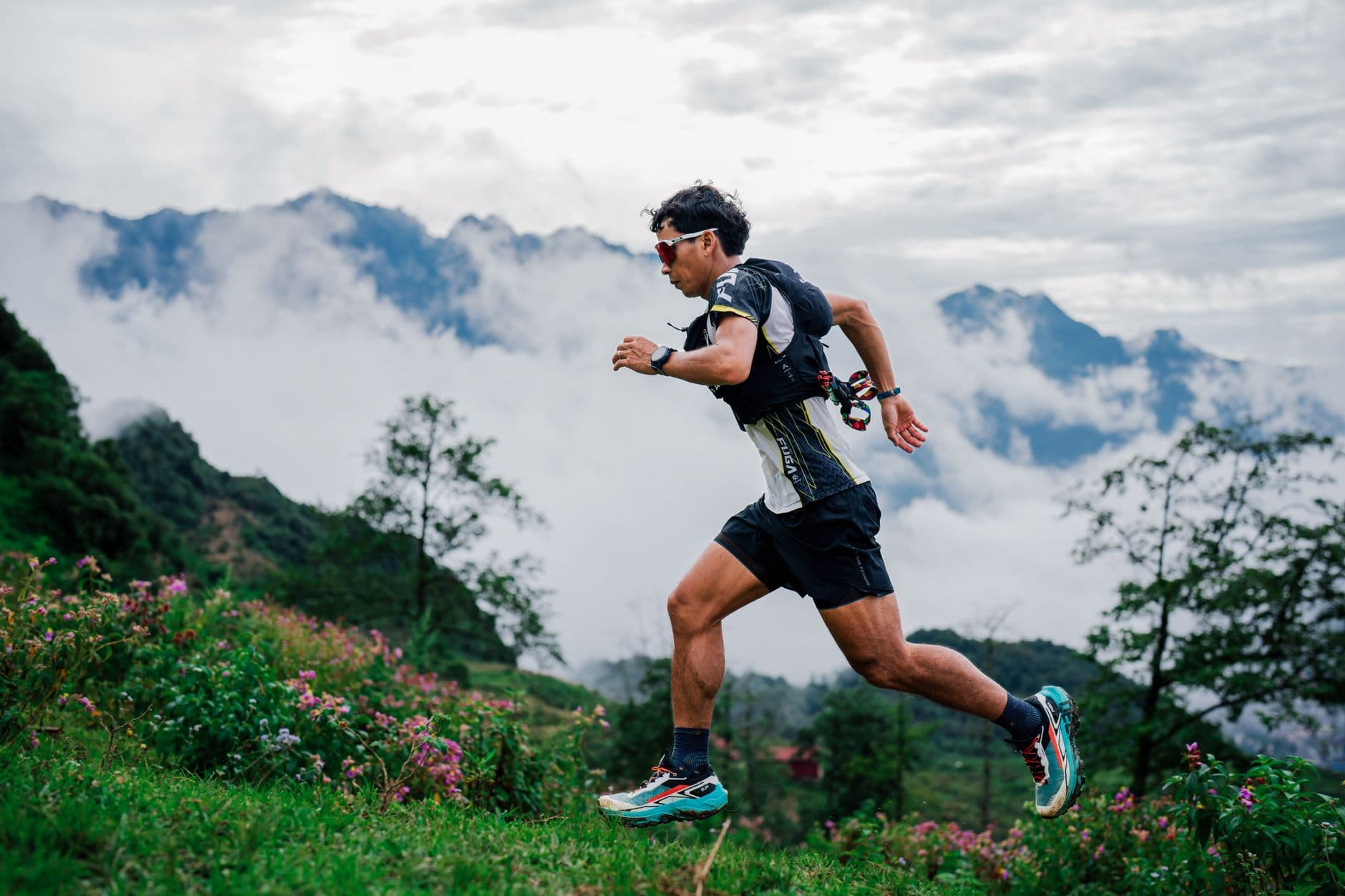 CSTrail and ultra training plan: vert, descents, eccentric legs12–20 wk · 5–6 d/wk · intermediate
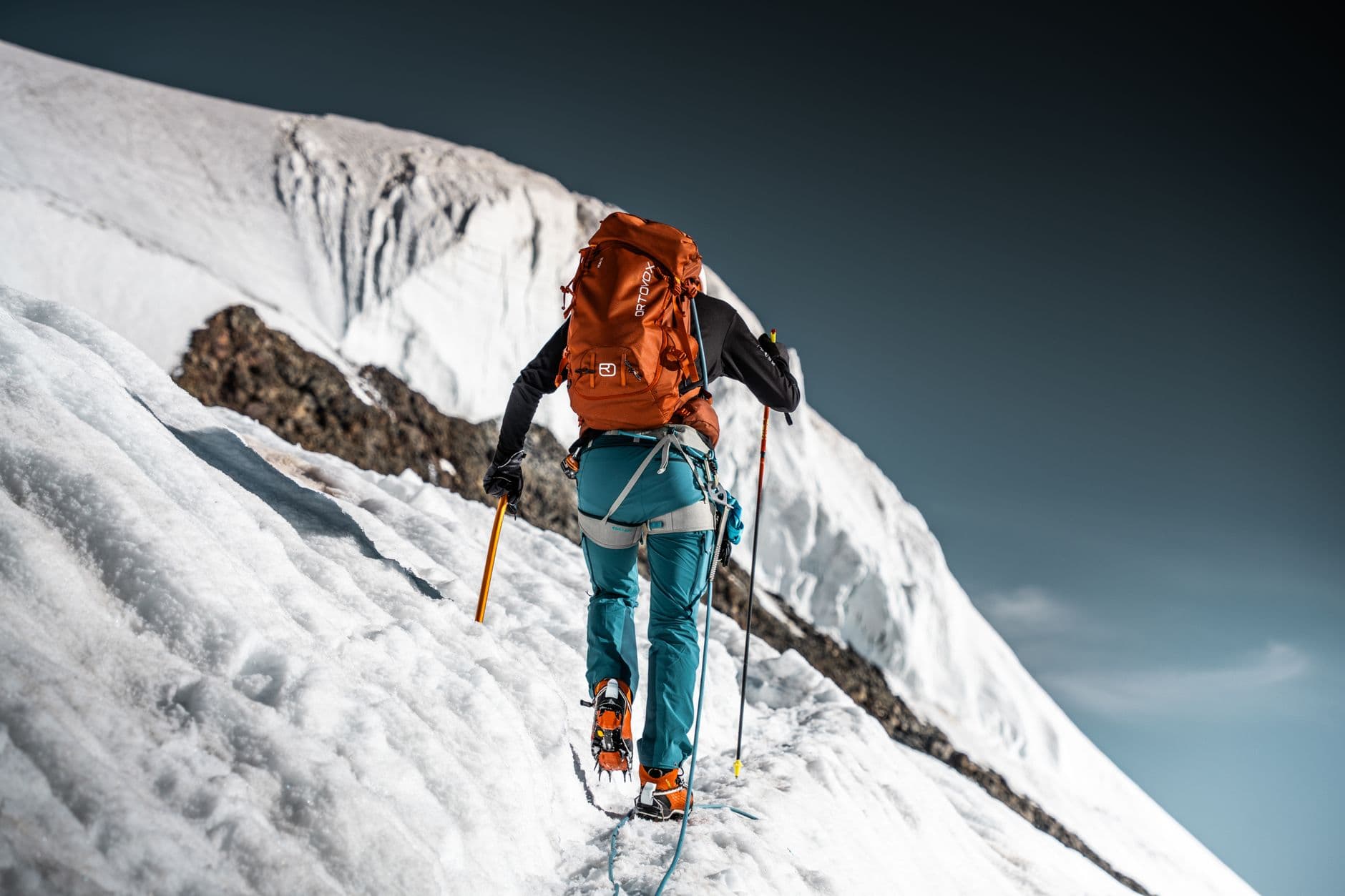 CSMountaineering and ski-mountaineering training plan14–24 wk · 5–6 d/wk · all levels
 KPistol squat program: from full squat to weighted pistol6–12 wk · 2–3 d/wk · beginner
 SCRucking training plan, with the strength work that holds it up8–12 wk · 4–5 d/wk · all levels