Sport-specific
Biomechanics and Programming for Olympic Weightlifting
weightlifting · all levels · power, strength, technique, explosive force
Updated
How this document is used
This is one of the 44 documents the phase.fitness generator reads before writing a phase. It receives the principles below as context, and the numbers in it become the bands a generated program has to respect. The references at the end are stripped from the prompt — the model is not allowed to cite studies — and kept here, for you to check.
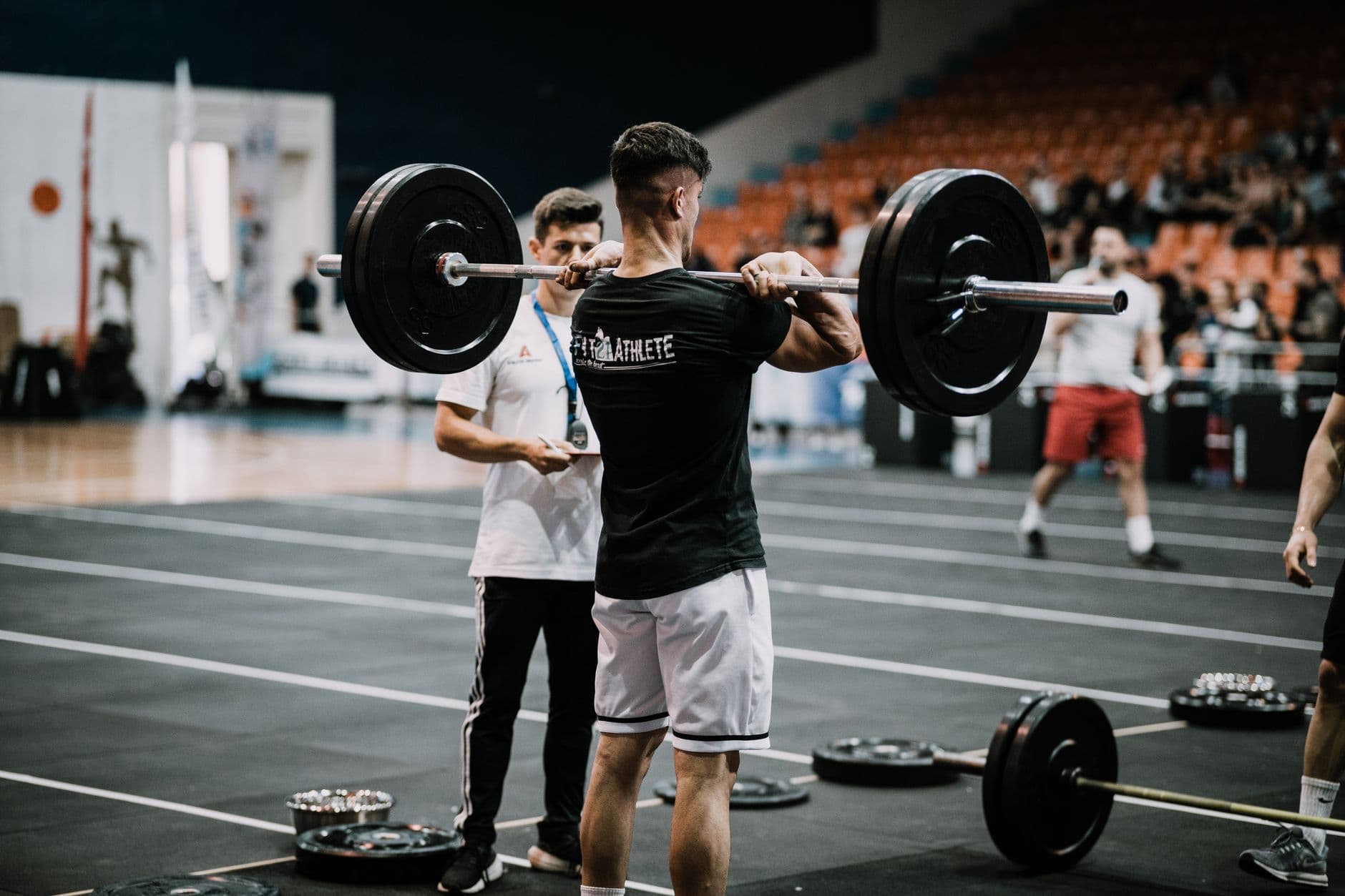
Weightlifting is contested in two lifts — the snatch and the clean & jerk — each a single maximal effort lasting under five seconds. The sport is decided by the heaviest successful attempt, not by work capacity, so almost everything in a weightlifting programme serves one of two ends: raising the ceiling of force the athlete can express, or raising the reliability with which they can express it under a bar that is already near that ceiling.
This makes weightlifting programming unusual. Volume exists to build technique and tissue tolerance, not to accumulate fatigue for its own sake, and a session that degrades bar path is a session that made the athlete worse regardless of tonnage.
Key Principles
1. Technical quality is a trainable quality, and it decays first
The competition lifts are motor skills performed at maximal intensity. Under fatigue, bar path degrades before force output does: the athlete can still move the load, but moves it along a worse trajectory. Reps performed after that point train the wrong pattern.
The practical rule is that classic lifts are cut on technical criteria rather than on failure. When bar path, catch position, or timing visibly deteriorate, that exercise is done for the day — even if prescribed sets remain, and even if the athlete could grind out more.
2. Intensity is prescribed as a percentage, but regulated by the day
Weightlifting programmes are traditionally written in percentages of a competition maximum. Because a maximum is a snapshot of one good day, a percentage prescription drifts out of calibration as soon as the athlete's readiness changes.
The standard resolution is to treat the written percentage as the plan and the day's best technically sound single as the reality — training around what the athlete has today rather than what they had at the last test. Autoregulation is not a departure from percentage-based programming here; it is what makes it survive contact with a training year.
3. Strength work supports the lifts, it does not replace them
Squats, pulls, and presses raise the force ceiling. They do not, on their own, improve the athlete's ability to express force in the specific positions of the snatch and jerk. A programme that drifts toward heavy squatting at the expense of classic lifting produces a stronger athlete who totals less.
The usual ordering within a session reflects this: classic lifts first, while the nervous system is fresh and technique is intact; derivatives and squats after; accessory work last.
4. The overhead positions are a mobility problem before they are a strength problem
A snatch cannot be received in a stable overhead position the athlete cannot passively achieve. Restrictions at the ankle, hip, thoracic spine, and shoulder show up as technical faults — early arm bend, forward catch, pressing out — that no amount of strength work resolves.
Position work is therefore a training priority rather than a warm-up formality: overhead squats, snatch-grip holds, and thoracic and ankle mobility earn their place in the session, not before it.
5. Jerk and clean fail for different reasons
Clean failures are usually strength or position failures: the pull was insufficient, or the receiving position could not be held. Jerk failures are usually timing and stability failures: the dip was inconsistent, the drive was not vertical, or the split was unstable.
Diagnosing which lift is limiting the total, and why, matters more than adding volume to both.
Guidelines & Recommendations
Session structure
A typical weightlifting session runs in this order:
- Positional and mobility preparation — overhead and receiving positions.
- Classic lift — snatch or clean & jerk, working to a technically sound top single or a cluster of quality singles.
- Derivative — pulls, hang variations, blocks, or complexes addressing the identified fault.
- Squat — back or front, according to the block's emphasis.
- Accessory — posterior chain, trunk, shoulder health.
Intensity distribution
- Technical work: 60–75% of maximum. High repeatability, low fatigue, used to groove pattern.
- Developmental work: 75–87%. The bulk of productive training for most athletes.
- Maximal work: 88%+. Used sparingly; the nervous-system cost is disproportionate and recovery is measured in days rather than hours.
Most training weeks spend the majority of classic-lift volume in the developmental band. Athletes who live above 90% see rapid short-term gains followed by technical decay.
Repetition ranges
- Snatch and clean & jerk: singles, doubles, and triples. Sets beyond three reps compromise technique in the competition lifts and are generally reserved for hang or complex work.
- Pulls: 2–4 reps, often at loads above the corresponding classic lift.
- Squats: 2–5 reps for strength emphasis, up to 6–8 in accumulation blocks.
- Accessory: 8–15 reps, trained for tissue quality and joint health rather than maximal load.
Frequency
Weightlifting tolerates — and generally requires — high frequency on the competition lifts, because they are skills. Three to six sessions per week is typical, with the classic lifts touched in most of them. This is the opposite of the low-frequency, high-volume logic that suits hypertrophy work, and the reason is skill retention rather than muscular adaptation.
Periodisation
A common structure runs:
- Accumulation (3–5 weeks): higher volume, lower intensity, emphasis on positions and derivatives. Squat volume peaks here.
- Transmutation (3–4 weeks): volume falls, intensity rises, derivative selection narrows toward the competition lifts.
- Realisation / peak (2–3 weeks): low volume, high intensity, almost exclusively classic lifts and heavy singles. Squat volume is reduced sharply to allow the lifts to express.
- Restoration (1 week): general physical preparation, minimal barbell load.
Deloads are more frequent than in general strength training, and are cut on technical and readiness signals rather than on a fixed calendar.
Common programming errors
- Squatting like a powerlifter and lifting like a weightlifter. Heavy squat volume carried into a peak block suppresses the very lifts it was meant to support.
- Adding volume to fix a technical fault. More repetitions of a bad pattern make the pattern more automatic, not better.
- Testing maxima too often. A true maximum is a competition event; frequent testing costs training days and rarely changes what the next block should contain.
- Neglecting the jerk. It is the lift most often lost in competition and the one most easily under-trained, because it fatigues less and therefore feels less like work.
Key Takeaways
- Cut classic lifts on technical criteria, never on failure.
- Treat written percentages as a plan and the day's technically sound single as the reality.
- Keep classic lifts first in the session and high in frequency: they are skills.
- Strength work raises the ceiling; only the competition lifts teach the athlete to reach it.
- Diagnose whether the clean or the jerk is limiting the total before adding volume to both.
- Overhead position is a prerequisite, not an outcome. Train it as content, not as warm-up.
References
- Verified against the published record, with DOIs so any number here can be
- checked rather than trusted. This document previously carried no sources at all.
- **Suchomel, T. J., Nimphius, S., & Stone, M. H. (2016).** The Importance of
- Muscular Strength in Athletic Performance. *Sports Medicine*, 46(10),
- 1419-1449. DOI: [10.1007/s40279-016-0486-0](https://doi.org/10.1007/s40279-016-0486-0) · PMID 26838985
- — The source for treating maximal strength as the base under the sport-specific
- qualities rather than an optional extra. Greater strength improves jumping,
- sprinting and change of direction, and stronger athletes perform better at
- sport-specific tasks while carrying a lower injury risk.