Sport-specific
Finger Strength and Relative Strength for Climbing and Bouldering
climbing · all levels · relative strength, strength, power, anaerobic capacity
Updated
How this document is used
This is one of the 44 documents the phase.fitness generator reads before writing a phase. It receives the principles below as context, and the numbers in it become the bands a generated program has to respect. The references at the end are stripped from the prompt — the model is not allowed to cite studies — and kept here, for you to check.
Climbing performance is governed by force relative to bodyweight, and the tissue that limits it first is almost always the fingers. A climber who adds upper-body mass without adding finger strength climbs worse, which makes this one of the few strength sports where the goal of the gym programme is explicitly not hypertrophy.
The second governing constraint is tissue timeline. Muscle adapts in weeks; tendon and pulley tissue adapt over months. Nearly every climbing injury comes from a training plan paced to the first timeline while loading the second.
Key Principles
1. Relative strength, not absolute strength
The relevant number is force per kilogram of bodyweight. Added muscle that does not contribute to pulling or body tension is a load the climber carries up every route.
This does not mean climbers should avoid strength training — it means the strength training should target neural qualities and connective-tissue capacity rather than cross-sectional area. Low repetitions, high intent, long rests, moderate total volume.
2. Fingers adapt more slowly than everything else
Pulleys, tendons, and the connective structures of the hand respond to load over months. A climber whose pulling strength improves quickly will out-train their fingers if training is paced to how the arms feel.
The practical consequences:
- Dedicated finger training is introduced only after a base of climbing experience — commonly cited as at least a year of consistent climbing, and longer for adolescents whose growth plates are still open.
- Progression is measured in small increments over months.
- Any sharp pain in a finger during loading ends the session, without exception.
3. Climbing is mostly a skill sport, and skill is trained by climbing
Movement efficiency, body positioning, footwork, and route reading contribute more to performance at most levels than maximal strength does. Time spent on a hangboard is time not spent learning to move.
Supplementary training earns its place when a specific physical quality is demonstrably limiting — the climber can read the sequence, can reach the hold, and simply cannot hold it. Below that threshold, more climbing beats more training.
4. Antagonist work is injury prevention, not aesthetics
Climbing is overwhelmingly a pulling sport with the shoulders repeatedly loaded overhead and internally rotated. Without deliberate pushing and external-rotation work, the shoulder and elbow accumulate the imbalances that produce the sport's characteristic overuse injuries — medial and lateral elbow pain above all.
This work is low-load, high-frequency, and permanent.
5. Bouldering and route climbing ask for different energy systems
- Bouldering: maximal efforts of 10–40 seconds with long rests. Alactic and strength-dominant.
- Sport climbing: sustained efforts of 2–15 minutes with pump management. Local muscular endurance of the forearms and the ability to recover on the wall.
A boulderer trained like a route climber loses maximal force; a route climber trained like a boulderer runs out of endurance on the crux at three-quarters height.
Guidelines & Recommendations
Session order
Finger and maximal-strength work goes first, when the tissue is fresh and the nervous system is intact. Endurance and volume climbing follow. Antagonist and general strength work goes last.
Finger training performed after a long climbing session loads fatigued tissue with reduced control — the specific condition in which pulley injuries occur.
Finger training
Prerequisites: at least a year of consistent climbing; no current finger pain; skeletally mature.
- Maximum hangs: 5–10 seconds at a load allowing a controlled hang, 5–8 repetitions, 2–3 minutes rest. Twice per week, never on consecutive days.
- Repeaters (endurance emphasis): 7 seconds on, 3 seconds off, 6 repetitions per set, 3–5 sets.
- Grip position: half-crimp is the standard training position. Full crimp loads the pulleys most aggressively and is trained cautiously if at all.
- Progression: small load increments over months. If a session's quality drops, hold the load rather than pushing it.
Pulling strength
- Weighted pull-ups: 4–6 sets of 2–5 repetitions, long rests.
- Lock-off holds at various elbow angles.
- Front lever progressions for body tension.
- 2 sessions per week, integrated with climbing rather than added on top of a full schedule.
Core and body tension
Climbing-specific trunk work is about resisting rotation and extension while the limbs load asymmetrically — hanging leg raises, front lever progressions, and anti-rotation work — rather than flexion volume.
Antagonist and shoulder health
Performed 2–3 times per week, low load:
- Pushing: push-ups, dips at moderate volume, overhead pressing.
- External rotation and scapular work.
- Wrist extensor work — the direct counterbalance to the sport's grip demands and the standard measure against lateral elbow pain.
- Finger extension against light resistance.
Weekly structure, intermediate climber
| Day | Content |
|---|---|
| 1 | Bouldering (skill and maximal). Antagonist work after. |
| 2 | Rest or light aerobic. |
| 3 | Finger training, then pulling strength. |
| 4 | Rest. |
| 5 | Volume climbing or endurance, depending on discipline. |
| 6 | Optional climbing, low intensity. Antagonist work. |
| 7 | Rest. |
Bodyweight and energy availability
Because performance is expressed relative to bodyweight, climbing carries a well-documented risk of disordered eating and low energy availability, with consequences for bone density, hormonal health, and — ultimately — performance itself. Underfuelled climbers lose finger strength and connective tissue quality before they lose weight advantage.
Programming should never treat weight reduction as a training variable. Where bodyweight is discussed at all, it belongs with a qualified professional, not in a training plan.
Common programming errors
- Hangboarding too early in the climbing career, when the fingers have not accumulated the years of load that make dedicated training safe.
- Training fingers when tired, at the end of a session, in the precise state where injury risk peaks.
- Adding upper-body mass through bodybuilding-style volume, which raises the load carried without raising the force applied.
- Skipping antagonist work until the elbow already hurts.
- Training only one discipline's energy system while competing in the other.
Key Takeaways
- The number that matters is force per kilogram, and added mass is a cost.
- Fingers adapt over months. Pace the plan to the slowest tissue, not the fastest.
- Climb to get better at climbing; train supplementary strength when a physical quality is demonstrably the limit.
- Finger work goes first in the session, never last.
- Antagonist and wrist extensor work is permanent, low-load, and preventive.
- Bouldering and route climbing need different energy-system work.
- Bodyweight is not a training variable.
References
- Verified against the published record, with DOIs so any number here can be
- checked rather than trusted. This document previously carried no sources at all.
- **Suchomel, T. J., Nimphius, S., & Stone, M. H. (2016).** The Importance of
- Muscular Strength in Athletic Performance. *Sports Medicine*, 46(10),
- 1419-1449. DOI: [10.1007/s40279-016-0486-0](https://doi.org/10.1007/s40279-016-0486-0) · PMID 26838985
- — The source for treating maximal strength as the base under the sport-specific
- qualities rather than an optional extra. Greater strength improves jumping,
- sprinting and change of direction, and stronger athletes perform better at
- sport-specific tasks while carrying a lower injury risk.
Programs built from this document
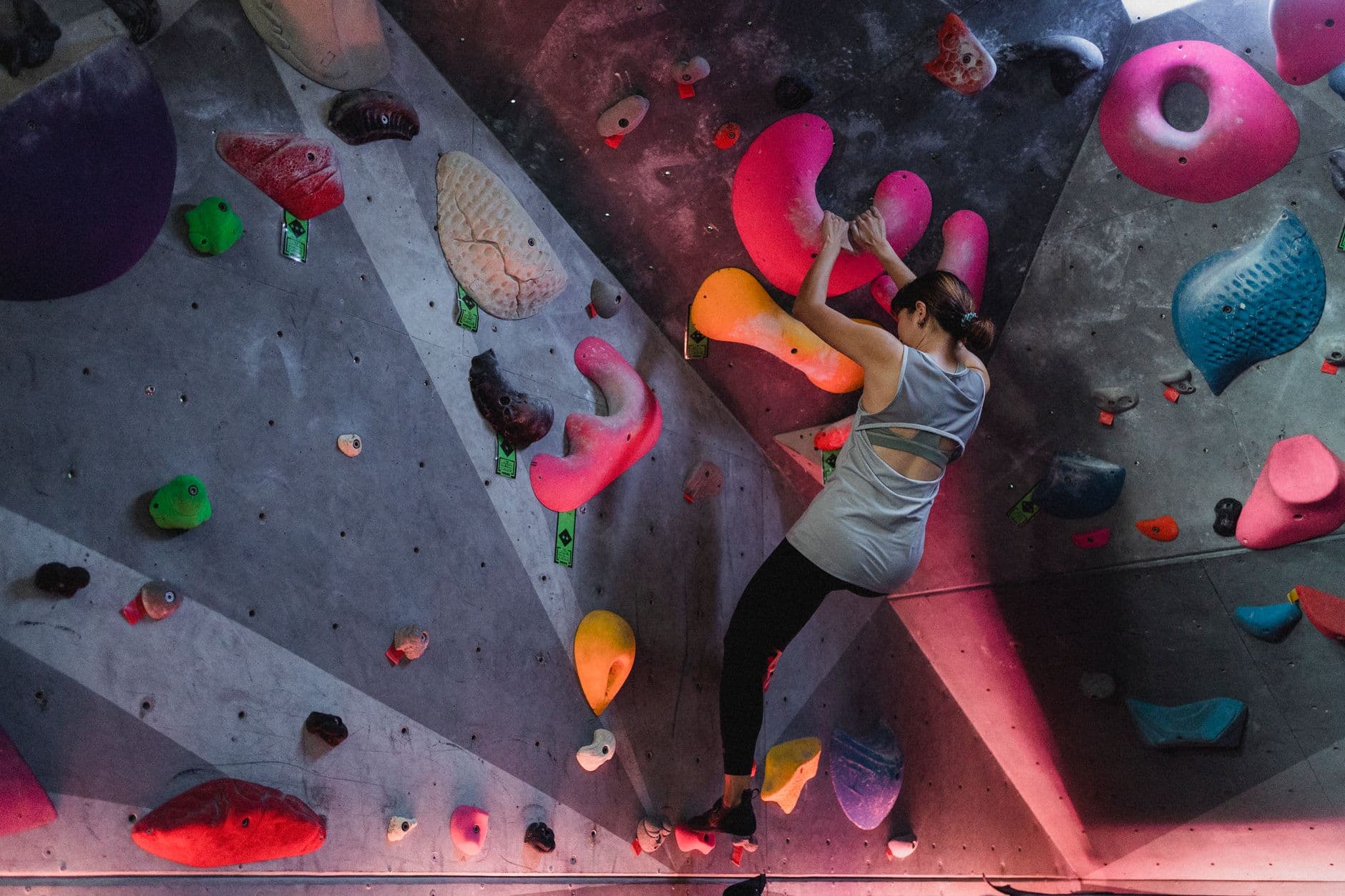 SKClimbing and bouldering strength program8–12 wk · 2 gym + climbing d/wk · intermediate
 KFront lever program: tuck to full, with holds12–24 wk · 2–3 d/wk · intermediate
 KOne-arm pull-up program: from archer to one arm16–52 wk · 2–3 d/wk · advanced
 SKCalisthenics and weights in one program8–12 wk · 4–5 d/wk · intermediate