Sport performance
Cross-country skiing training plan for the off-season
phase.fitness plans the eight to ten dry-land months of a skier's year as the document prescribes: a polarized base with zone 3 minimised, threshold and VO2max sessions added in Base II, volume down 15% before the season, and 2–3 strength sessions built around upper-body pulling.
Updated
- Level
- All levels
- Length
- 12–24 weeks
- Days per week
- 5–6
- Modalities
- CardioStrength
- Equipment
- Roller skis, a bike or running shoes for dry land, a double-pole erg or rowing machine; a gym with cables
- Sessions go to
- Garmin, Intervals.icu, Strava, Hevy
The short answer
A cross-country plan in phase.fitness follows the skiing document's periodization: Base I (high volume in Z1–Z2, strength introduced), Base II (threshold intervals of 4–6 × 3–8 minutes at LT2 and VO2max sets of 5–8 × 2–4 minutes at equal work-to-rest, technique refined), pre-competition (race-pace work, volume down 15%) and the competition period (maintain and recover between races). The distribution is 80% below LT1 and 20% above LT2 with zone 3 deliberately minimised. Strength is 2–3 sessions a week on lat pulldown, seated cable row, trunk and single-leg stability.
Polarized, with the upper body doing real work
The skiing document phase.fitness reads is the purest polarized model in the knowledge base: 80% of time below the first threshold, 20% above the second, and zone 3 minimised on purpose. Easy distance of 45–120 minutes must be genuinely easy — heart rate under 75% of max — because that is where fat oxidation and technique fluency are built; the over-distance session of 2–4 hours, entirely zone 1, is the other pillar.
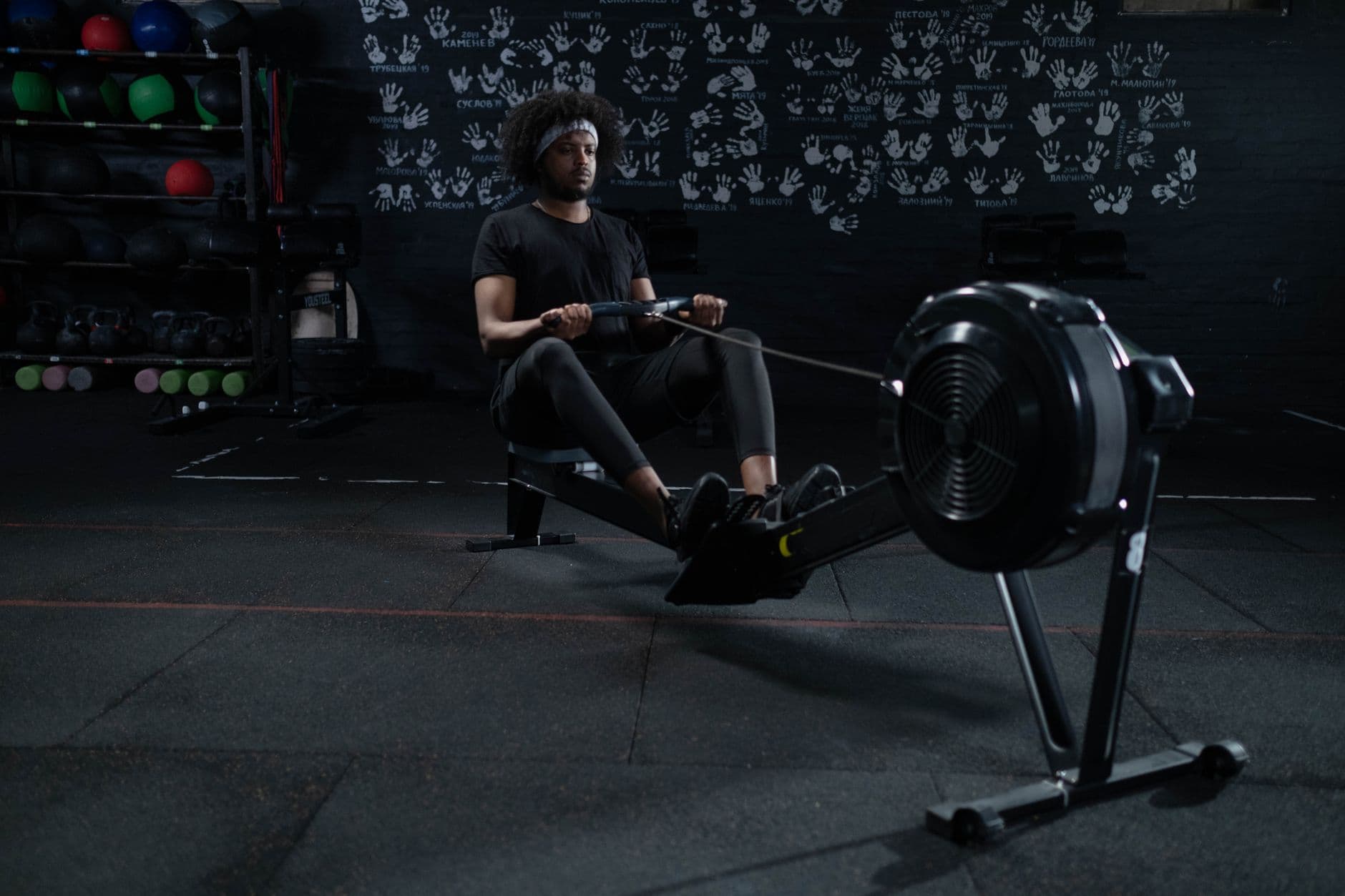
What separates skiing from running is the upper body: double poling and V2 make the lats, triceps and trunk an aerobic engine. So the dry-land block uses a double-pole ergometer or a rowing machine for upper-body aerobic capacity, and the strength sessions lead with lat pulldown and seated cable row at 2–3 sessions a week in base.
How do you train for cross-country skiing in the summer?
On dry land, and phase.fitness plans the whole of it: Base I is high volume in zones one and two on roller skis or on foot with strength introduced, Base II adds threshold intervals of 4–6 × 3–8 minutes and VO2max sets, and pre-competition brings race-pace work with volume down 15%.
Do you need roller skis to train off-season?
Not for the plan to work. phase.fitness prescribes the dry-land sessions by duration, zone and intensity, so an easy distance session of 60–90 minutes counts whether it is rolled or run. Roller skiing is the closer match for technique, and technique on snow stays with your coach.
What phase.fitness builds
A program is a sequence of phases, each with a job. These are the phases phase.fitness writes for this case, with the bands the generator has to respect — transcribed from the document it reads, not invented for this page.
Base I
6–8
Base II
6–8
Pre-competition
6–8
Competition
season
| Phase | Weeks | Job | Band |
|---|---|---|---|
| Base I | 6–8 | High volume Z1–Z2 on dry land; strength introduced | 80% below LT1; easy distance 45–120 min; over-distance 2–4 h; strength 2–3×/week pulling, trunk, single-leg |
| Base II | 6–8 | Add threshold and VO2max, refine technique | Threshold 4–6 × 3–8 min at LT2, 2 min easy; VO2max 5–8 × 2–4 min Z4–5, equal rest; 20% above LT2 |
| Pre-competition | 6–8 | Race-pace work | Volume down 15%; sprint intervals 8–12 × 15–30 s with 2–3 min recovery |
| Competition | season | Maintain fitness, recover between races | Easy distance dominant; one quality session between races |
A sample week
One week from the first phase, as it would sit on the calendar. Your own week follows the days you say you have — 5–6 here — and the equipment you list.
- SStrength
- CCardio
- Rest
| Day | Modality | Session |
|---|---|---|
| Mon | C | Easy distance roller ski or run 60–90 min, Z1–2 |
| Tue | C | Threshold: 5 × 4 min at ~85% max HR, 2 min easy |
| Wed | S | Lat pulldown, seated cable row, split squat, trunk — 3–4 × 6–10 |
| Thu | C | VO2max: 6 × 3 min Z4–5, equal recovery |
| Fri | Rest | Rest or very easy recovery |
| Sat | C | Over-distance 2–4 h, all zone 1 |
| Sun | S | Second gym day, lighter; double-pole erg 20 min easy |
S = strength · C = cardio · K = calisthenics. The order is the point: hard days are kept apart and the long session gets the clean slot.
How it adapts when a phase ends
Between phases phase.fitness reads the dry-land sessions from Garmin or Intervals.icu — time in zones, the over-distance session's real length, heart rate on the interval days — and the pulling strength from the gym log. Garmin activities are read only if you allow it. Because zone 3 is the failure this sport's document names, a block where the easy days drifted into tempo produces a next block with the easy targets pulled down explicitly. Roller ski and run sessions arrive as their own sport or as generic cardio; both count in the load.
Where the sessions go
phase.fitness plans; you train in the app or on the watch you already use, and the completed session comes back. For this program:
What phase.fitness does not do here
phase.fitness plans the dry-land months and the gym; technique on snow — diagonal stride timing, V1 and V2 — is a coaching matter the document describes and phase.fitness cannot see. Cross-country skiing reaches a Garmin watch as generic cardio, not by sport name.
The evidence
The documents this page is built from
These are the knowledge-base documents the phase.fitness generator reads for this case. The phases, bands and weekly numbers above are transcribed from them.
- Training Principles for Cross-Country Skiing — updated 2026-06-16, crossCountrySkiing
- Physiological Optimization for Long-Distance Performance — updated 2026-02-21, endurance
Frequently asked questions
Can phase.fitness plan the dry-land season for a skier?
Yes. The skiing document phase.fitness reads assumes 8–10 months on dry land and applies the same polarized model with roller skiing, running, a double-pole erg or rowing machine, and cycling. phase.fitness writes those sessions by zone and duration and sends them to your watch.
What strength training does a skier need?
phase.fitness plans two or three sessions a week in base focused on upper-body pull strength — lat pulldown, seated cable row — plus trunk and single-leg stability, as the document prescribes. Volume drops before the competition period.
Why is zone 3 minimised?
Because in the polarized model phase.fitness follows, moderate intensity produces fatigue without the adaptations of either easy volume or hard intervals. The plan keeps 80% of time below the first threshold and 20% above the second.
The only app that plans strength, cardio and calisthenics together
For a skier the calisthenics day is straight-arm pulling and trunk tension — lever and L-sit progressions — the exact chain that double poling loads for hours.
Right now, phase.fitness is the only training app that writes strength, cardio and calisthenics into one periodized program — same calendar, same phases, same recovery budget.
You choose the mix. A calisthenics-only plan, a cardio-only block, strength plus cardio, or all three: the phases, the end-of-phase analysis and the sync work the same way with one modality or three.
Why calisthenics is in the plan
Bodyweight skill work is strength training in a different shape. Straight-arm work, levers and handstands build scapular control, tendon capacity and relative strength that barbell and machine work leave untouched, and they transfer because they are closed-chain, whole-body patterns. Treated as a modality rather than a warm-up, they get sets, holds and progressions like a squat does.
No exercise catalogue on the market contains a tuck front lever, so those sessions run in the phase.fitness built-in player; strength goes to Hevy, Liftosaur or a Garmin watch, cardio to Garmin and Intervals.icu. How the skill work is programmed.
Free to start, no card. The first phase is yours to keep whatever you decide.