Sport-specific
Physiology and Programming for Aquatic Performance
swimming · all levels · endurance, power, anaerobic capacity
Updated
How this document is used
This is one of the 44 documents the phase.fitness generator reads before writing a phase. It receives the principles below as context, and the numbers in it become the bands a generated program has to respect. The references at the end are stripped from the prompt — the model is not allowed to cite studies — and kept here, for you to check.
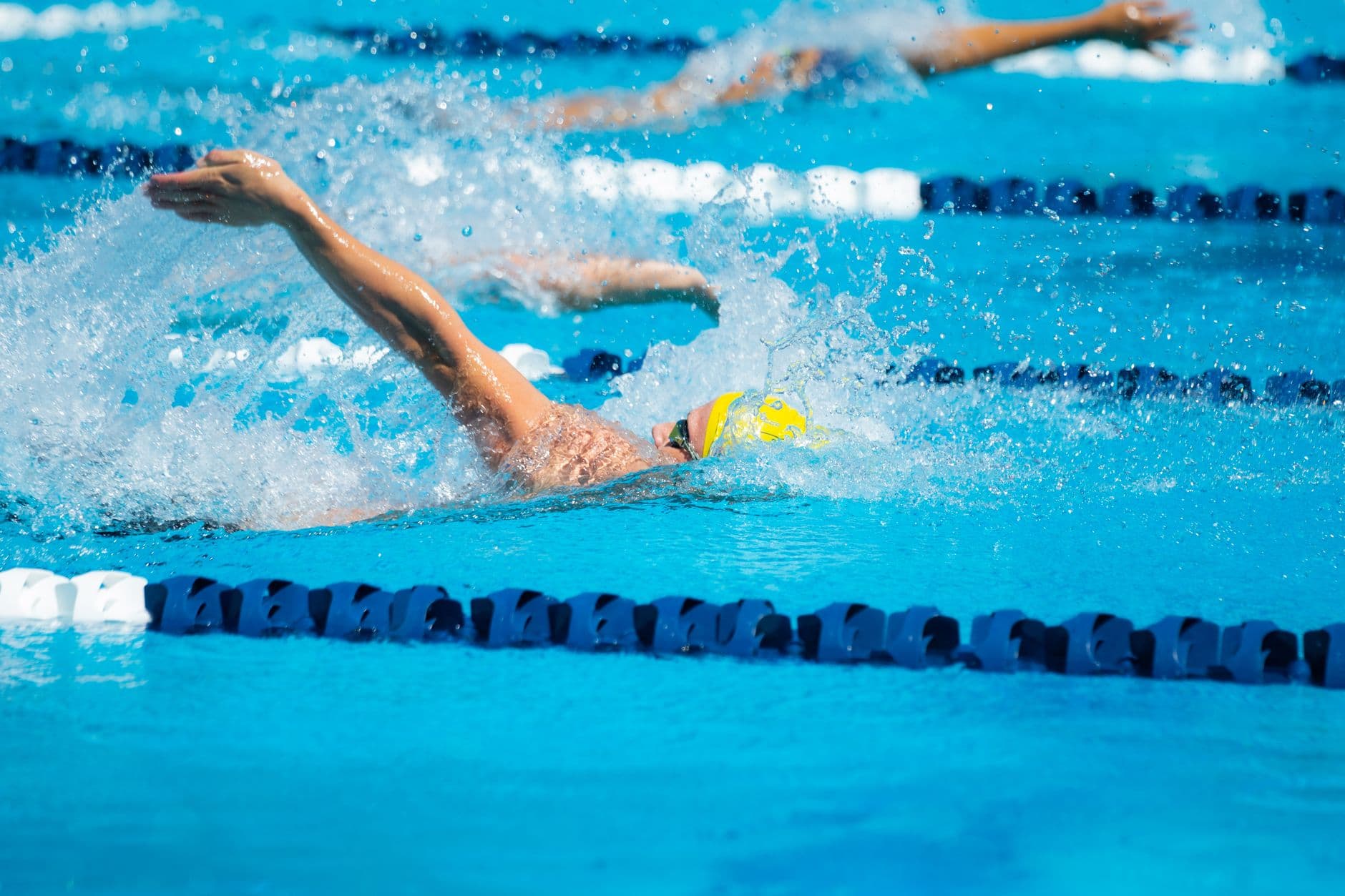
Aquatic sports — primarily competitive swimming and water polo — present unique physiological challenges due to the properties of water. The metabolic cost of movement in water is drastically higher than on land, demanding exceptional aerobic capacity, refined technique, and sport-specific power. This document provides evidence-based guidelines for training aquatic athletes across all levels.
Physical Demands
Primary Demands
- Aerobic Power (VO2 Max): The single best predictor of performance in events lasting more than 2 minutes (400m and above). Swimmers require sustained oxygen delivery to working muscles over repeated intervals.
- Anaerobic Capacity: Dominant energy pathway for 100m and 200m events. Lactate accumulation can reach 15–20 mmol/L during maximal 200m efforts.
- Drag Reduction: The metabolic cost of swimming a given distance is roughly four times that of running it, because water resistance dominates. Minimising drag through streamlining is therefore a primary training objective, not a technical refinement.
Secondary Demands
- Upper Body Muscular Endurance: Swimming is approximately 80–90% upper-body driven in freestyle events. Shoulders, lats, and triceps bear the primary load.
- Core Stability: Maintaining a horizontal and hydrodynamic body position depends on core strength and coordination.
- Alactic Power (ATP-CP): Critical for starts, turns, and breakouts — the first 10 seconds of explosive effort.
Water Polo-Specific Demands
- Treading (Eggbeater Kick): Sustained isometric-like effort from the lower body to maintain an elevated position.
- Throwing Power: Rotational power from the core and shoulder complex.
- Repeated Sprint Ability: 15–25 meter sprints with incomplete recovery, repeated over four 8-minute quarters.
Key Principles
1. Drag Is the Limiting Factor
Active drag is described by the equation: D = ½ρv²CdA, where ρ is water density, v is velocity, Cd is the drag coefficient, and A is frontal area. Since drag increases with the square of velocity, even small improvements in streamlining yield significant performance gains. Training must dedicate structured time to body position drills, kick sets focused on alignment, and underwater breakout technique.
2. Energy System Development Is Event-Specific
- Sprint events (50m): Primarily alactic (ATP-CP).
- Middle-distance (100–200m): Anaerobic glycolytic dominance.
- Distance (400m+): Aerobic power is paramount.
3. Taper and Peak
A taper of 2–3 weeks that reduces volume by 41–60% while maintaining intensity consistently produces improvements in race performance in the order of 2–3%.
4. Technique Before Fitness
Due to the drag equation, inefficient technique costs more energy than poor fitness. Technical work should be prioritized in every session.
Guidelines & Recommendations
Training Zones
| Zone | Focus | Intensity (% Max HR) | Typical Sets | Rest Interval |
|---|---|---|---|---|
| EN1 | Basic Aerobic | 60–75% | 20 × 100m | 15–20 sec |
| EN2 | Threshold | 80–85% | 5 × 400m | 30–45 sec |
| EN3 | VO2 Max | 90–100% | 10 × 100m | 1:1 ratio |
| SP1 | Lactate Tolerance | Maximal | 4 × 50m | 5–8 min |
| SP2 | Sprint / Alactic | Supramaximal | 8 × 25m | 2–3 min |
Weekly Volume Guidelines
- Age-Group Swimmers (12–15 yrs): 20,000–35,000m per week across 5–7 sessions.
- Senior Competitive: 40,000–60,000m per week across 8–10 sessions.
- Elite / National Level: 60,000–80,000m per week, with double sessions 4–5 days.
Dryland (Strength) Training
- Frequency: 2–3 sessions per week.
- Focus: Shoulder stabilization, core anti-rotation, lat/tricep strength.
- Caution: Excessive hypertrophy increases frontal area and drag. Prioritize relative strength.
Periodization
- General Preparation (8–12 weeks): High volume EN1/EN2. Build aerobic base.
- Specific Preparation (6–8 weeks): Increase EN3 and SP1. Reduce total volume 10–15%.
- Competition Phase (2–4 weeks): Taper. Reduce volume 41–60%. Race-pace sets.
Key Takeaways
- Drag reduction through technique is the most cost-effective performance improvement.
- Energy system training must match event demands.
- Taper 2–3 weeks before competition, reducing volume 41–60% while maintaining intensity.
- Dryland training (2–3x/week) supports shoulder health and power output.
- Shoulder prehab is non-negotiable.
References
- Maglischo, E. W. (2003). *Swimming Fastest.* Human Kinetics.
- Mujika, I. (2002). Tapering and peaking for optimal performance. *European Journal of Sport Science*, 2(3), 1–16.
- Costill, D. L., Maglischo, E. W., & Richardson, A. B. (1992). *Swimming.* Blackwell Scientific Publications.
Source note: Maglischo (2003), Mujika (2002), Costill (1992)