Sport performance
Dryland strength and conditioning for swimmers
phase.fitness writes the dryland side of a swimming season: 2–3 strength sessions a week built for relative strength and shoulder health, periodized around your pool phases, with bodyweight skill work as the dryland tool it has always been.
Updated
- Level
- All levels
- Length
- 8–16 weeks
- Days per week
- 2–3 dryland
- Modalities
- StrengthCalisthenics
- Equipment
- A gym or cables and dumbbells; rings or a bar for the bodyweight work
- Sessions go to
- Hevy, Garmin, Strava
The short answer
For swimmers phase.fitness builds what its aquatic-sports document prescribes: 2–3 dryland sessions a week focused on shoulder stabilisation, core anti-rotation and lat and triceps strength, with the explicit caution that excessive hypertrophy raises frontal area and drag — so relative strength is the goal. The strength phases mirror the pool's periodization: general preparation (8–12 weeks, high EN1/EN2 volume), specific preparation (6–8 weeks, more EN3 and SP1, volume down 10–15%) and competition (2–4 weeks, taper of 41–60%). Your pool sessions stay with your coach; phase.fitness plans the gym and the bodyweight work around them.
Drag is the limiting factor, so mass is not the goal
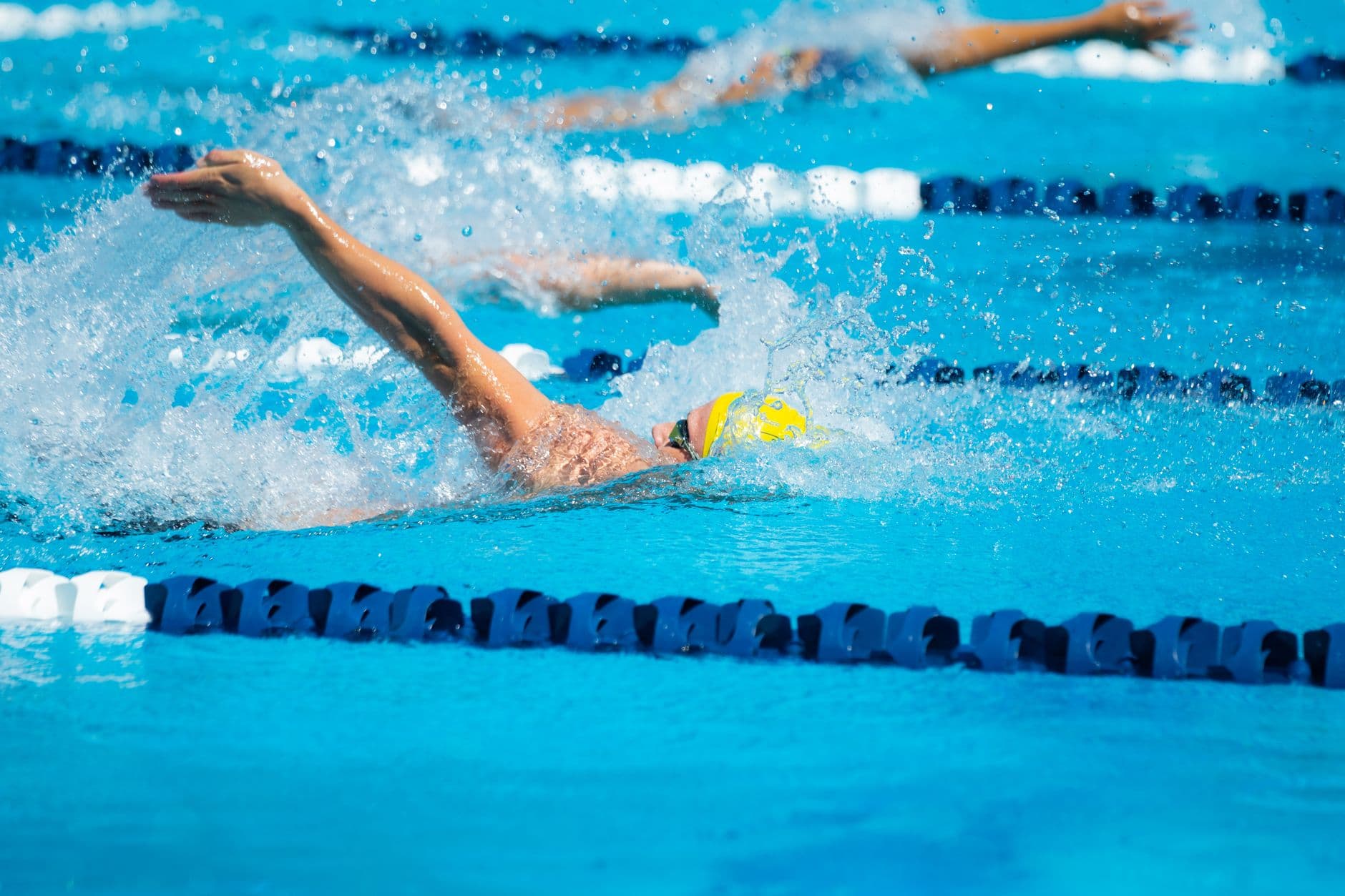
The aquatic document phase.fitness reads opens with the thing most swimmers' gym programs get wrong: drag rises with frontal area, so muscle added for its own sake makes you slower. Dryland is for relative strength — lat and triceps force for the pull, shoulder stabilisation so the thousands of strokes a week do not become an impingement, and anti-rotation trunk work for a body that rotates around its long axis with every stroke.
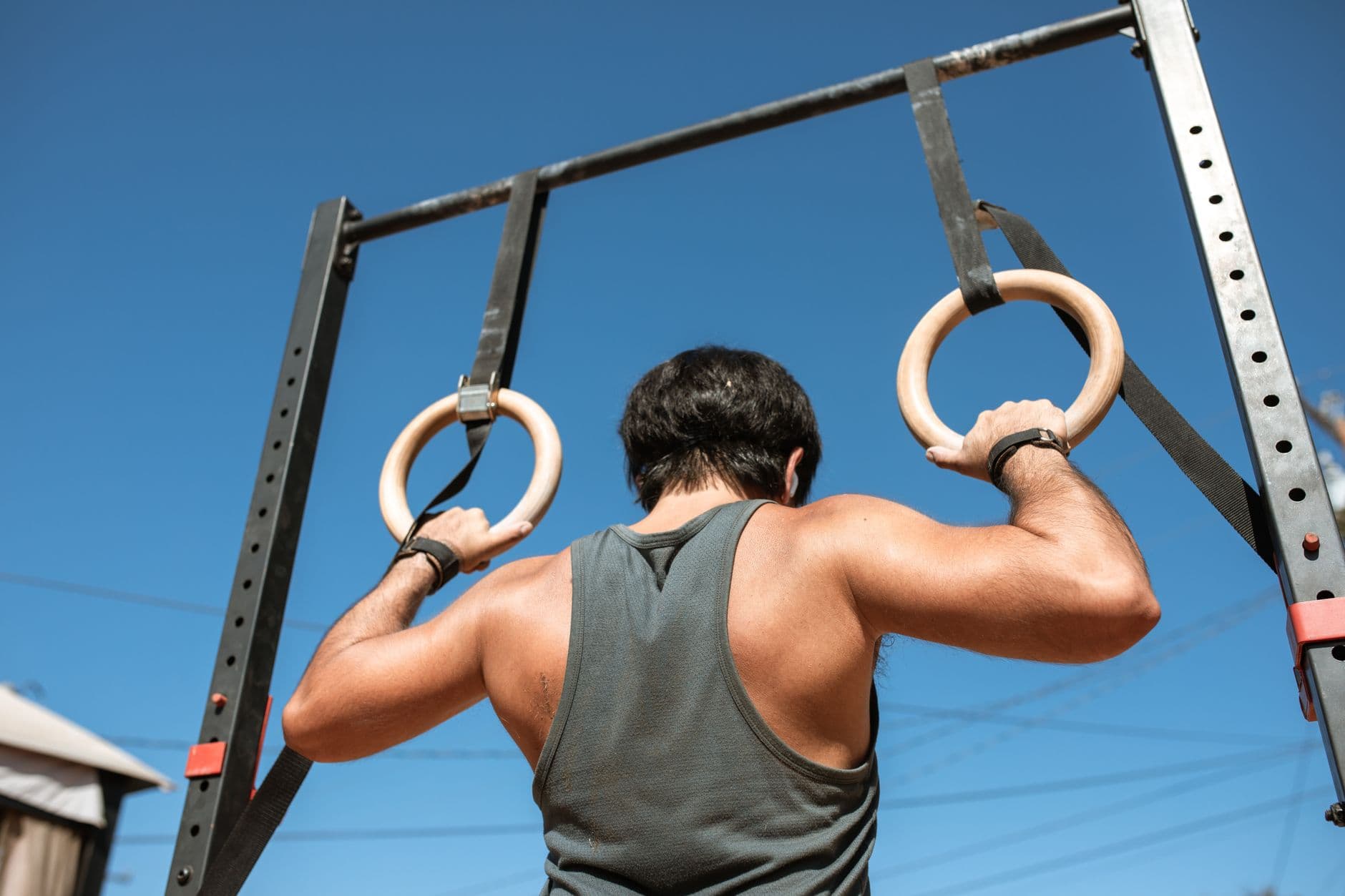
That is also why calisthenics is the natural dryland modality: L-sit and lever progressions load the scapula and trunk exactly the way the water does, without a bar on the back. phase.fitness programs them as skills with steps, holds and rest, alongside the weighted work.
What dryland exercises are best for swimmers?
phase.fitness programs shoulder stabilisation, anti-rotation trunk work and lat and triceps strength: pull-ups or pulldowns, dips, cable rows, external rotations and face pulls, with scapular pull-ups, L-sits and ring support holds on the bodyweight day. Relative strength is the goal, because added frontal area costs drag.
When in the season should swimmers lift?
Through all of it, with the load shaped by the pool. phase.fitness mirrors the season: a general preparation block of eight to twelve weeks builds the foundation on land, specific preparation of six to eight weeks trims it as pool intensity rises, and the competition block tapers by 41–60%.
What phase.fitness builds
A program is a sequence of phases, each with a job. These are the phases phase.fitness writes for this case, with the bands the generator has to respect — transcribed from the document it reads, not invented for this page.
General preparation
8–12
Specific preparation
6–8
Competition
2–4
| Phase | Weeks | Job | Band |
|---|---|---|---|
| General preparation | 8–12 | Aerobic base in the pool; strength foundation on land | Dryland 2–3×/week: shoulder stabilisation, anti-rotation, lat/triceps 3–4 sets moderate loads; no hypertrophy volume |
| Specific preparation | 6–8 | Pool intensity rises (EN3, SP1), pool volume down 10–15% | Dryland 2–3×/week, heavier and lower volume: 3–5 × 3–6; skill holds maintained |
| Competition | 2–4 | Taper | Pool volume down 41–60%; dryland 1–2 short sessions at intensity, nothing that creates soreness |
A sample week
One week from the first phase, as it would sit on the calendar. Your own week follows the days you say you have — 2–3 dryland here — and the equipment you list.
- SStrength
- KCalisthenics
- Rest
| Day | Modality | Session |
|---|---|---|
| Mon | S | Pull-ups or pulldown, dips, cable rows, external rotation — 3–4 sets, after the morning swim |
| Tue | Rest | Pool only |
| Wed | K | L-sit progression, hollow holds, scapular pull-ups, ring support holds |
| Thu | Rest | Pool only |
| Fri | S | Weighted pull-up 4 × 3–5, overhead press, Pallof press, face pulls |
| Sat | Rest | Pool: race-pace sets in specific prep |
| Sun | Rest | — |
S = strength · C = cardio · K = calisthenics. The order is the point: hard days are kept apart and the long session gets the clean slot.
How it adapts when a phase ends
phase.fitness reads the dryland sessions from Hevy, Liftosaur or the watch — loads, reps, RPE — and the calisthenics holds from its own player. Pool sessions recorded on your watch come in through Garmin or Intervals.icu as swims and count in the week's load. Garmin activities are read only if you allow it. When a phase ends, a dryland plan that was skipped on hard pool weeks is moved to lighter days in the next phase; holds that stopped progressing keep their step and the plan says why.
Where the sessions go
phase.fitness plans; you train in the app or on the watch you already use, and the completed session comes back. For this program:
What phase.fitness does not do here
phase.fitness does not write pool sessions or coach technique; the aquatic document is explicit that technique comes before fitness, and that is a coach's job. What phase.fitness plans is everything on land, periodized to your pool phases and season dates.
The evidence
The documents this page is built from
These are the knowledge-base documents the phase.fitness generator reads for this case. The phases, bands and weekly numbers above are transcribed from them.
- Physiology and Programming for Aquatic Performance — updated 2026-02-21, swimming
- Relative Strength and Neuromuscular Control for Skill and Aesthetic Sports — updated 2026-02-21, gymnastics
Read more in the knowledge base
Frequently asked questions
Will a swimming program make me bulkier?
Not by design. The aquatic document phase.fitness reads warns that excessive hypertrophy increases frontal area and drag, so the dryland work targets relative strength: lat and triceps force, shoulder stabilisation and core anti-rotation, at 2–3 sessions a week without hypertrophy volume.
Does phase.fitness plan my pool sessions?
No. Pool sessions stay with you and your coach. phase.fitness plans the dryland strength and bodyweight work around your general, specific and competition phases, and reads your swims when they come in from Garmin or Intervals.icu.
How many dryland sessions a week?
phase.fitness plans two or three, as the aquatic document prescribes: strength on two days, a calisthenics skill day for scapular and trunk control where the week allows it, and one or two short sessions at intensity during the taper.
The only app that plans strength, cardio and calisthenics together
For a swimmer the calisthenics day is the dryland session that fits the sport best: L-sit, hollow and support holds train the scapular control and trunk tension the stroke depends on, with no mass added.
Right now, phase.fitness is the only training app that writes strength, cardio and calisthenics into one periodized program — same calendar, same phases, same recovery budget.
You choose the mix. A calisthenics-only plan, a cardio-only block, strength plus cardio, or all three: the phases, the end-of-phase analysis and the sync work the same way with one modality or three.
Why calisthenics is in the plan
Bodyweight skill work is strength training in a different shape. Straight-arm work, levers and handstands build scapular control, tendon capacity and relative strength that barbell and machine work leave untouched, and they transfer because they are closed-chain, whole-body patterns. Treated as a modality rather than a warm-up, they get sets, holds and progressions like a squat does.
No exercise catalogue on the market contains a tuck front lever, so those sessions run in the phase.fitness built-in player; strength goes to Hevy, Liftosaur or a Garmin watch, cardio to Garmin and Intervals.icu. How the skill work is programmed.
Free to start, no card. The first phase is yours to keep whatever you decide.