Situations
phase.fitness for beginners
Your first program should be simple, frequent and progressive — three full-body days, the same lifts, a little more weight each time. phase.fitness writes exactly that, from the documents that say why, and it is free to start.
Updated
The short answer
For a beginner, phase.fitness writes what the frequency and strength-basics documents prescribe: full-body training three times a week with 3–5 exercises and 3–4 sets each, session-to-session linear progression of 2.5–5 kg on the compound lifts, a reset to 90% when a lift stalls, loads stopping short of failure. The Full Body 3× — 8 weeks template is the program the library suggests starting from. Sessions run in the phase.fitness built-in player or go to Hevy, Liftosaur or a Garmin watch; the free tier includes 10 AI credits a month and no limit on the programs and routines you build yourself, and it does not expire.
What is a good gym routine for beginners?
Three full-body days a week, in phase.fitness: squat, hinge, press, pull and trunk across two alternating sessions, three or four sets each, stopping one to three reps short of failure. The Full Body 3× — 8 weeks template is where the library suggests starting, and the built-in player shows what to do set by set.
How much weight should a beginner add each week?
Each session, not each week, while form holds: phase.fitness adds 2.5–5 kg to the compound lifts session to session and resets a lift to 90% when it stalls, then climbs again. Linear progression keeps working for a long time at the start, which is why the strength-basics document keeps it until it stops.
Your week, honestly
Too many choices, all of them splits.
The internet gives a beginner a six-day bodybuilding split; the documents phase.fitness reads say three full-body days.
No idea what weight.
The first session is a guess, the second is a copy of the first, and nothing tells you when to add.
Soreness ends it.
Training to failure in week one produces the soreness that is the main reason beginners stop.
What phase.fitness does about it
Squat, hinge, press, pull and trunk in two alternating sessions — the structure the frequency document prescribes for the first years, because patterns need frequent practice.
Linear progression, managed
Add 2.5–5 kg to the compounds each session while form holds; reset to 90% when a lift stalls. Each week's targets are planned in the phase, and the next phase starts from your log.
Short of failure
Sets stop 1–3 reps short, at RPE 7 in the first block, because soreness is what stops beginners and it buys nothing at this dose.
10 AI credits a month, programs and routines you build yourself without limits, the full exercise library and the bodyweight skill roadmaps, with no card and no expiry.
Programs to start from
Each of these is a page of its own, with the phases, a sample week and the evidence behind it.
The apps you already use
The evidence
The documents this page is built from
These are the knowledge-base documents the phase.fitness generator reads for this case. The phases, bands and weekly numbers above are transcribed from them.
- Strength Training Basics — updated 2025-01-07
- Training Frequency Guidelines — updated 2025-01-18
- Training for General Fitness and Health — updated 2026-09-01
Frequently asked questions
Do I need to know my one-rep max?
No. A beginner's plan in phase.fitness starts at a light working weight and adds 2.5–5 kg per session while form holds; the estimated 1RM is computed from what you log, not typed in.
How many days a week should I train?
Three full-body sessions, as the frequency document phase.fitness reads recommends for the first years — beginners recover quickly, need frequent practice of the patterns, and progress on low per-session volume.
Is phase.fitness free for beginners?
The free tier includes 10 AI credits a month and no limit on the programs and routines you build yourself, the full exercise library and the skill roadmaps, and it does not expire. PRO adds end-of-phase analysis, sync and 100 AI credits a month.
The only app that plans strength, cardio and calisthenics together
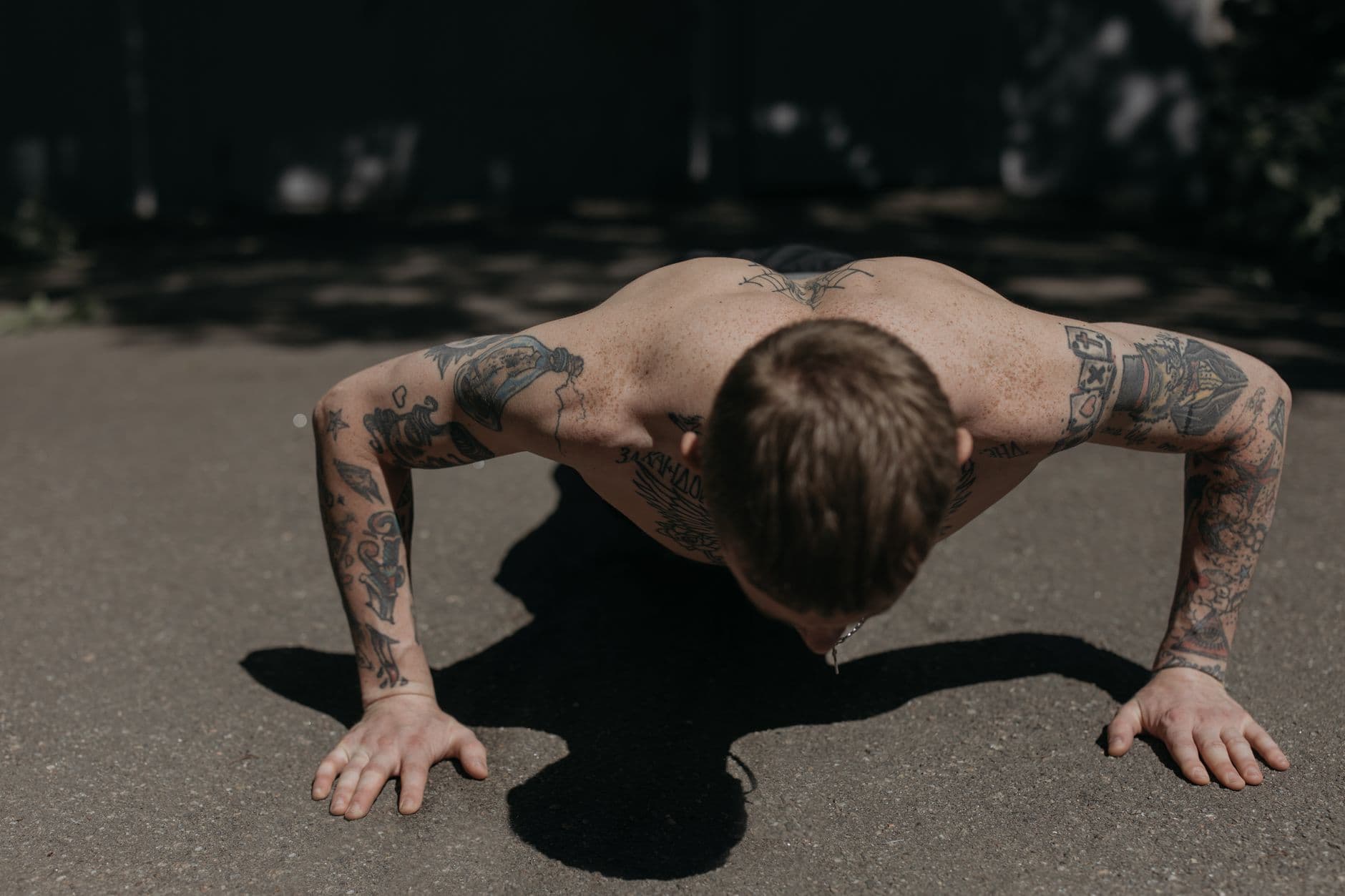
For a beginner the calisthenics day is the same patterns without plates — push-up, row, squat and L-sit progressions with steps — learned in the version that needs only a floor and a bar.
Right now, phase.fitness is the only training app that writes strength, cardio and calisthenics into one periodized program — same calendar, same phases, same recovery budget.
You choose the mix. A calisthenics-only plan, a cardio-only block, strength plus cardio, or all three: the phases, the end-of-phase analysis and the sync work the same way with one modality or three.
Why calisthenics is in the plan
Bodyweight skill work is strength training in a different shape. Straight-arm work, levers and handstands build scapular control, tendon capacity and relative strength that barbell and machine work leave untouched, and they transfer because they are closed-chain, whole-body patterns. Treated as a modality rather than a warm-up, they get sets, holds and progressions like a squat does.
No exercise catalogue on the market contains a tuck front lever, so those sessions run in the phase.fitness built-in player; strength goes to Hevy, Liftosaur or a Garmin watch, cardio to Garmin and Intervals.icu. How the skill work is programmed.
Free to start, no card. Connect the apps you already use and build the first phase.