Sport-specific
Vertical Power and Anaerobic Capacity for Court-Based Team Sports
court sports · all levels · power, vertical jump, agility, anaerobic capacity
Updated
How this document is used
This is one of the 44 documents the phase.fitness generator reads before writing a phase. It receives the principles below as context, and the numbers in it become the bands a generated program has to respect. The references at the end are stripped from the prompt — the model is not allowed to cite studies — and kept here, for you to check.
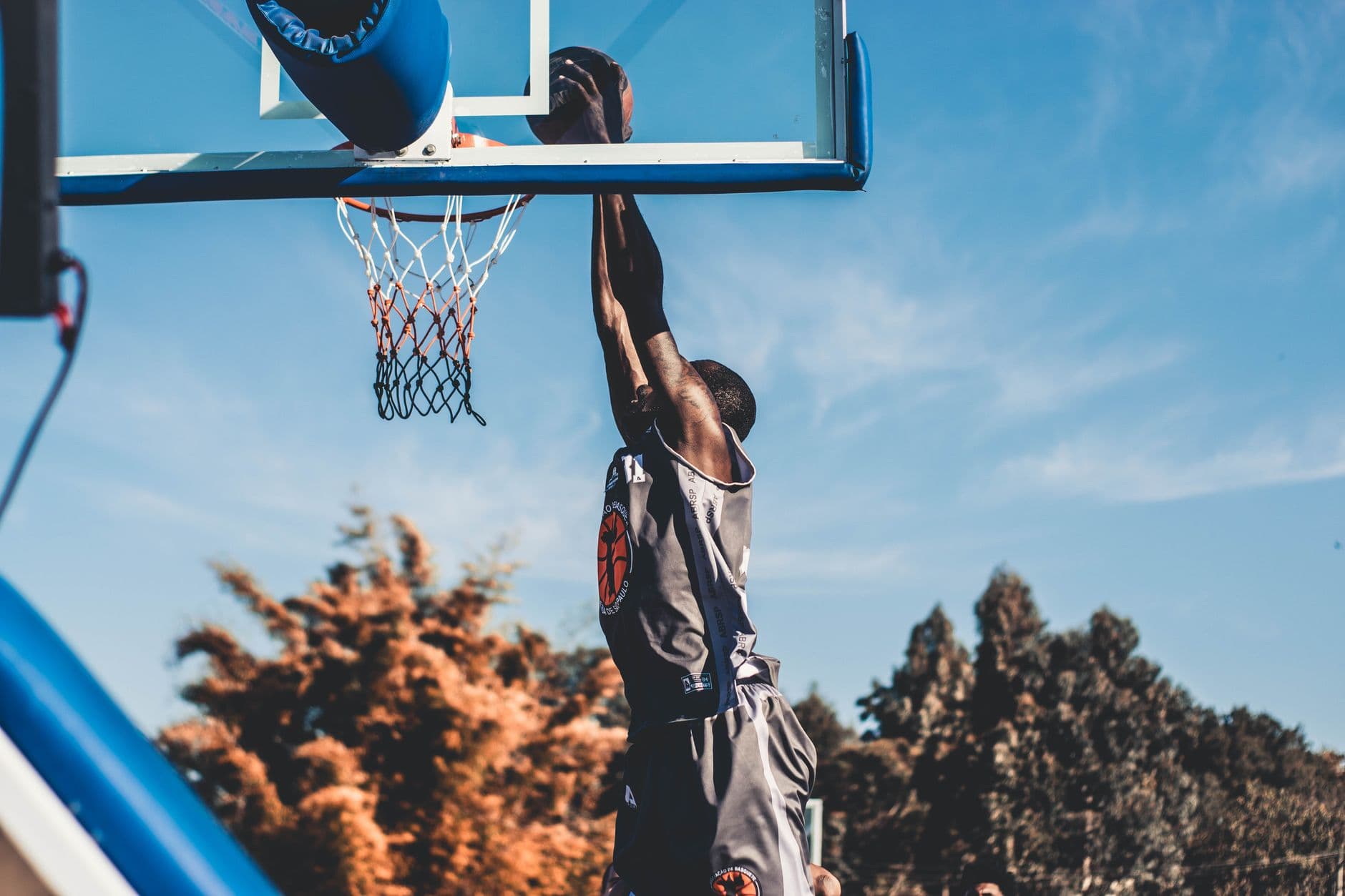
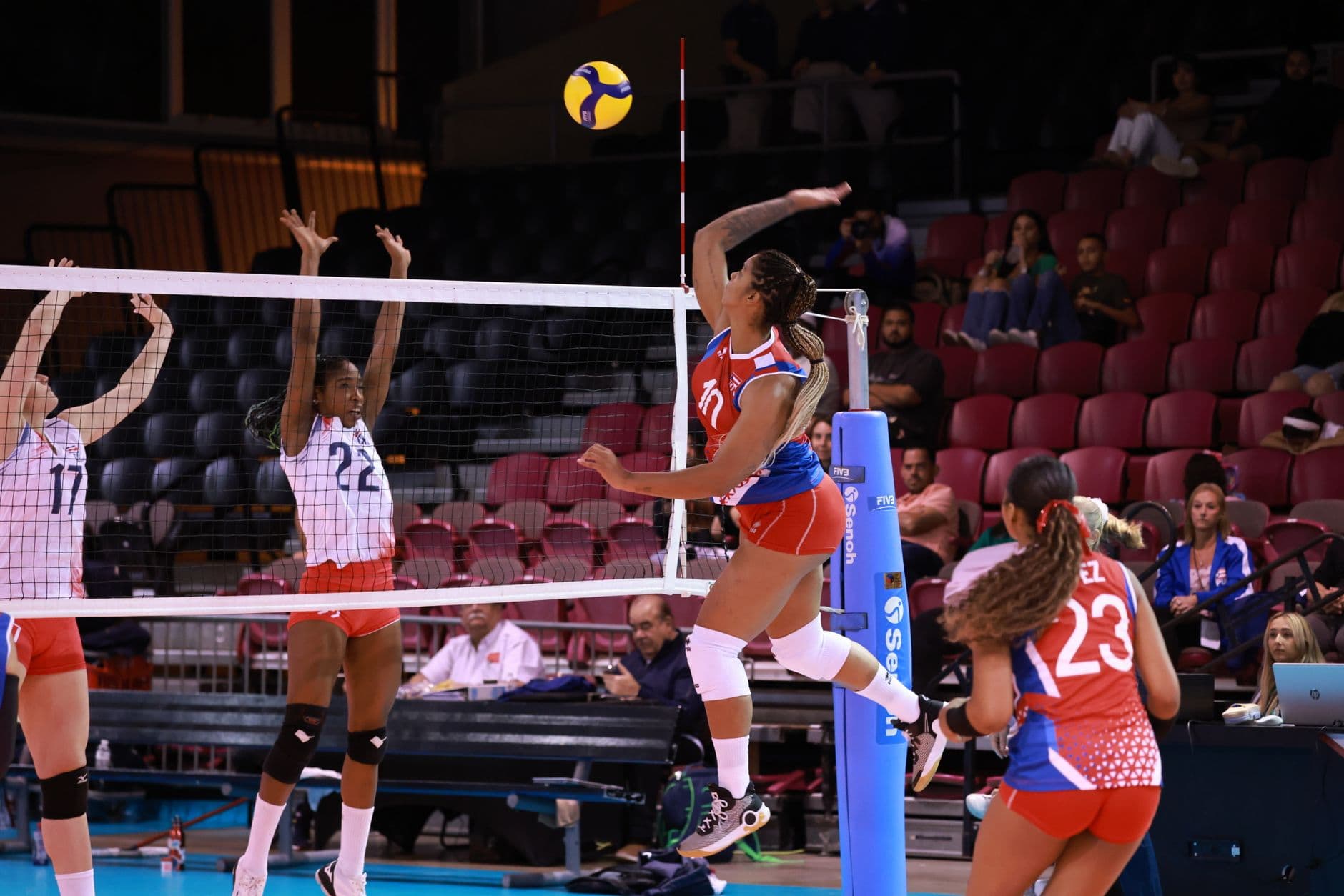
Basketball, volleyball, and handball share: repeated vertical jumping, multi-directional agility, sustained anaerobic output, explosive performance across extended game durations.
Key Principles
1. The Stretch-Shortening Cycle (SSC)
The stretch-shortening cycle underlies jumping: a rapid eccentric-to-concentric transition stores and releases elastic energy. Train it through plyometrics with minimal ground contact time.
2. Repeat jump ability matters more than a single maximal jump
A vertical jump test measures one effort. A volleyball player jumps dozens of times in a set and hundreds in a match; a basketball player accumulates comparable volume across rebounds, contests and finishes.
What decides the fourth quarter is not peak jump height but how little of it has been lost. That quality — repeat jump ability — is trained with sets of 10–20 consecutive jumps and with game-simulation conditioning, and it is supported by an aerobic base that allows recovery between clusters of efforts.
An athlete who improves their maximal jump by five centimetres and loses ten by the end of a match has not improved.
3. Landing Before Jumping
Neuromuscular landing programmes reduce ACL injury rates substantially — reported reductions are in the range of 50–70%. Require competent landing mechanics before adding jump volume.
4. Concurrent development, because the season is long
Court sports compete for months, which rules out the block model where one quality is developed at a time. An undulating structure — strength, power, speed and endurance each touched within the same week — keeps all of them present at the cost of developing each more slowly.
That trade is correct here: a quality allowed to decay across a five-month season is not recovered by a good block in the summer.
5. Jump volume is a load that has to be counted
Patellar tendinopathy — jumper's knee — is the characteristic overuse injury of these sports, and it comes from jump volume that rises faster than tendon capacity. Practice and matches supply large and largely uncontrolled jump volumes.
The consequence for programming: plyometric volume in the gym is counted in ground contacts and set against the volume the sport is already supplying, not on top of it. In a heavy competition week, the correct plyometric prescription is often none.
6. Landing is where the ACL injuries happen
Non-contact ACL injuries in these sports occur predominantly on landing and cutting, in a knee position the athlete can be taught to avoid. Landing mechanics are therefore trained as a prerequisite to jump volume rather than as rehabilitation after an injury.
The risk is not evenly distributed: female athletes show substantially higher non-contact ACL injury rates in the same sports, which makes neuromuscular landing programmes correspondingly more valuable rather than optional.
Guidelines & Recommendations
Vertical Jump Progression
| Phase | Focus | Methods | Duration |
|---|---|---|---|
| Foundation | Landing mechanics | Drop landings, single-leg squats | 3–4 weeks |
| Strength | Max force | Squat, deadlift @ 85–90% | 4–6 weeks |
| Power | Force-velocity | Jump squats (30%), depth jumps, Olympic lifts | 4–6 weeks |
| Sport-Specific | RJA | Repeated jumps, game-simulation | Ongoing |
Plyometric Programming
| Exercise | Sets × Reps | Rest | Frequency |
|---|---|---|---|
| Box Jump | 3 × 6 | 90 sec | 2–3× |
| Countermovement Jump | 4 × 5 | 2 min | 2× |
| Depth Jump (40–60 cm) | 3 × 5 | 3 min | 1–2× |
| Approach Jump | 4 × 4 | 2 min | 2× |
Total contacts per session: 40–80 (trained). Beginners: 20–40.
Key Strength Exercises
- Back Squat: 4 × 4–6 @ RPE 8.
- Bulgarian Split Squat: 3 × 6 each leg.
- Hip Thrust: 3 × 8.
- Nordic Hamstring Curl: 3 × 5 (ACL prevention).
In-season management
Match and practice load dominates the week. The gym holds two short sessions that maintain strength at high intensity and low volume, and plyometric work is reduced or removed entirely in weeks with multiple matches.
The two items that survive every cut are the eccentric hamstring work and the landing mechanics work: both are preventive, both are cheap in time and fatigue, and both address the injuries that end seasons.
Injury Prevention
- ACL: structured neuromuscular warm-up programmes, landing mechanics, and eccentric hamstring work. Reported risk reductions are in the range of 50–70%, which is among the largest effects available anywhere in sports injury prevention — and the programme takes fifteen minutes.
- Patellar tendinopathy: managed primarily through jump volume rather than through exercise selection. Eccentric and heavy slow resistance protocols where symptoms are present.
- Ankle: proprioceptive training and, where there is a history of sprain, bracing. Previous sprain is the strongest predictor of the next one.
Common programming errors
- Adding plyometrics to a heavy competition week, on top of jump volume the sport already supplies.
- Training the maximal jump and never training the repeated jump.
- Jump volume before landing competence.
- Block periodization across a long season, letting qualities decay in turn.
Key Takeaways
- The stretch-shortening cycle is the foundation of vertical jump performance.
- RJA is more game-relevant than peak single jump.
- Landing mechanics training reduces ACL injury rates by roughly 50–70%.
- Strength foundation (squat ≥1.8× BW) before plyometric emphasis.
- Monitor total jump volume to prevent patellar tendinopathy.
References
- Sheppard, J. M., et al. (2008). JSCR, 22(3), 758–765.
- Hewett, T. E., et al. (2005). American Journal of Sports Medicine, 33(4), 492–501.
- Ziv, G., & Lidor, R. (2010). Journal of Science and Medicine in Sport, 13(3), 332–339.
Source note: Sheppard et al. (2008), Ziv & Lidor (2010), Stojanovic et al. (2017)