Sport performance
Basketball strength and conditioning program
phase.fitness builds basketball preparation in the order the court-sports document prescribes — landing before jumping, maximal force before power, repeated jumps before a single big one — and counts plyometric contacts against the volume the sport already supplies.
Updated

- Level
- All levels
- Length
- 12–16 + season weeks
- Days per week
- 3–4
- Modalities
- StrengthCardio
- Equipment
- A rack and barbell, boxes, a court or a track for repeated sprints
- Sessions go to
- Hevy, Garmin, Strava
The short answer
A basketball program in phase.fitness runs foundation (3–4 weeks of landing mechanics: drop landings, single-leg squats), strength (4–6 weeks: back squat 4 × 4–6 at RPE 8, Bulgarian split squat 3 × 6 per leg, hip thrust 3 × 8, Nordic curl 3 × 5), power (4–6 weeks: box jumps 3 × 6, countermovement jumps 4 × 5, depth jumps 3 × 5, approach jumps 4 × 4 — 40–80 contacts a session for trained athletes, 20–40 for beginners) and sport-specific work on repeat-jump ability. In season the gym holds two short sessions at high intensity and low volume, plyometrics are cut in multi-match weeks, and eccentric hamstring and landing work survive every cut. Conditioning is repeated-sprint work, not distance.
Repeat-jump ability, not one big jump
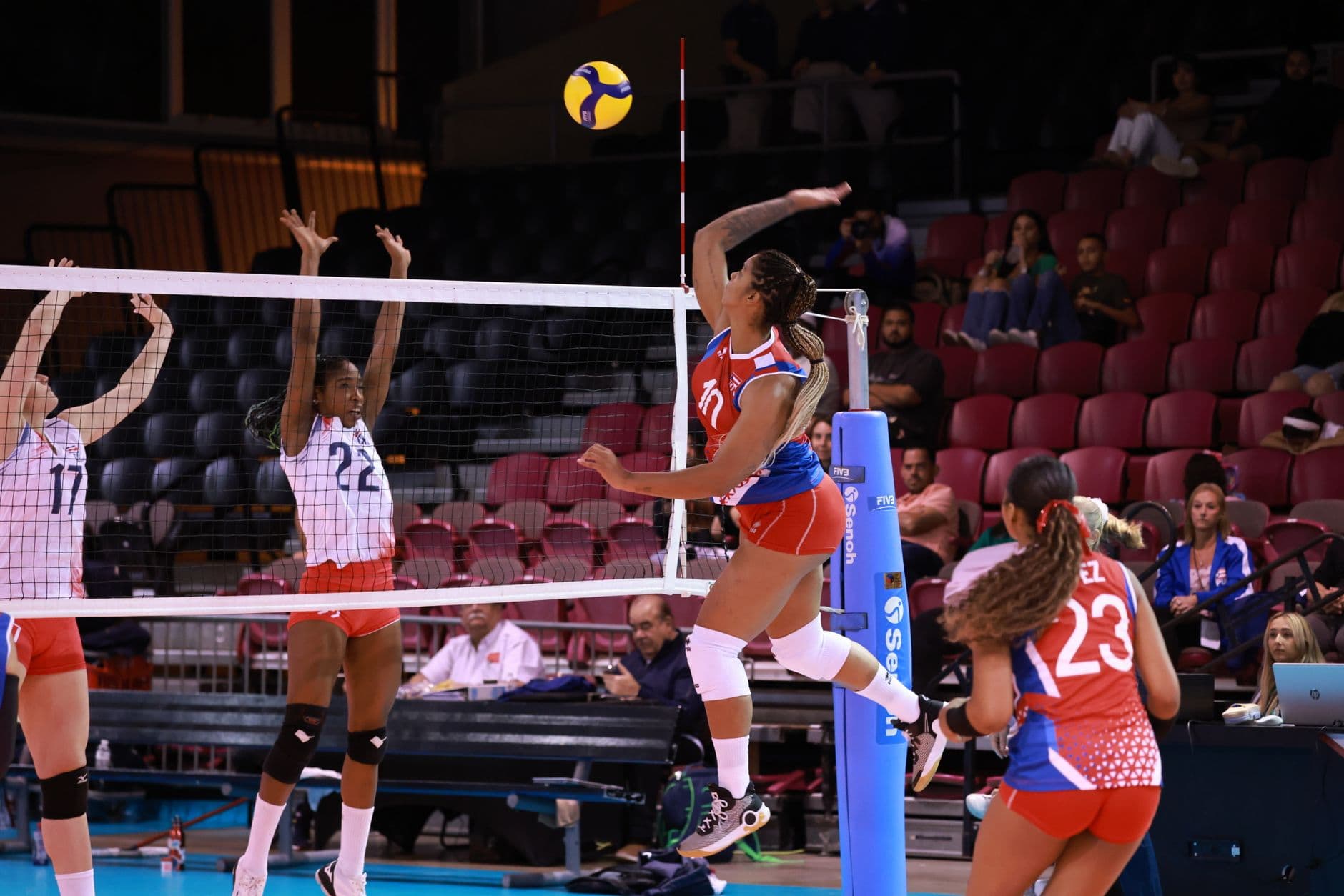
The court-sports document phase.fitness reads says the fourth quarter is decided by how little of the vertical jump has been lost, not by its peak. A basketball player accumulates hundreds of jumps a week in practice and games; the gym's job is to make landing competent before adding any jump volume, to build maximal force in a strength block, and then to convert it — jump squats at 30%, depth jumps, Olympic lifts — while counting every plyometric contact against what the season already supplies. Landing programs cut non-contact ACL injuries by 50–70%, which is why they come first and are never cut.
The season is long, so the model is undulating rather than block: strength, power, speed and repeated-effort capacity each touched within the week at lower doses, because a quality allowed to decay across five months is not recovered by a good summer block.
How many jumps per session is too many?
phase.fitness counts ground contacts rather than sets: 40–80 a session for a trained athlete, 20–40 for a beginner, and fewer again in a week with two games. The count is what keeps a power block from turning into the tendon load that practice is already supplying.
How do you protect knees and hamstrings in basketball?
phase.fitness opens with three to four weeks of landing mechanics — drop landings and single-leg squats — before any jump volume, then keeps Nordic curls and landing work in every week of the plan. They are the last things cut when the season compresses the gym down to two short sessions.
What phase.fitness builds
A program is a sequence of phases, each with a job. These are the phases phase.fitness writes for this case, with the bands the generator has to respect — transcribed from the document it reads, not invented for this page.
Foundation
3–4
Strength
4–6
Power
4–6
In-season
season
| Phase | Weeks | Job | Band |
|---|---|---|---|
| Foundation | 3–4 | Landing mechanics before jump volume | Drop landings, single-leg squats; repeated-sprint conditioning 1×/week ≤30 min |
| Strength | 4–6 | Maximal force | Squat 4 × 4–6 at RPE 8 (85–90%), Bulgarian split squat 3 × 6/leg, hip thrust 3 × 8, Nordic curl 3 × 5 |
| Power | 4–6 | Force-velocity | Box jump 3 × 6, CMJ 4 × 5, depth jump 3 × 5, approach jump 4 × 4; 40–80 contacts/session trained, 20–40 beginners; repeated sprints 2×/week |
| In-season | season | Keep strength, count the jumps | Two short gym sessions, high intensity, low volume; plyometrics reduced or removed in multi-match weeks; eccentric hamstrings and landing work never cut |
A sample week
One week from the first phase, as it would sit on the calendar. Your own week follows the days you say you have — 3–4 here — and the equipment you list.
- SStrength
- CCardio
- Rest
| Day | Modality | Session |
|---|---|---|
| Mon | S | Back squat 4 × 5 at RPE 8, hip thrust 3 × 8, Nordic curl 3 × 5, landing drills |
| Tue | C | Repeated sprints: 3 sets of 6 × 5 s, 25 s recovery, 3 min between sets |
| Wed | Rest | Practice |
| Thu | S | Bulgarian split squat 3 × 6/leg, trap-bar deadlift 3 × 5, upper-body push and pull |
| Fri | S | Power: box jumps 3 × 6, CMJ 4 × 5 (≈60 contacts), then a light upper session |
| Sat | Rest | Practice or game |
| Sun | Rest | — |
S = strength · C = cardio · K = calisthenics. The order is the point: hard days are kept apart and the long session gets the clean slot.
How it adapts when a phase ends
phase.fitness reads the gym sessions from Hevy, Liftosaur or the watch — the squat's load and RPE, whether the Nordic curls were done — and the conditioning as activities from Garmin or Intervals.icu. Garmin activities are read only if you allow it. The document's prerequisite for a plyometric emphasis is a squat around 1.8× bodyweight; a strength block that did not get there produces a power block with contacts held at the beginner range. If you gave phase.fitness your season dates, the phases are laid out to end before the first game, and the in-season block starts on it.
Where the sessions go
phase.fitness plans; you train in the app or on the watch you already use, and the completed session comes back. For this program:
What phase.fitness does not do here
phase.fitness plans the strength, the plyometrics and the repeated-sprint conditioning; it does not know your practice schedule unless you tell it, so in-season weeks with multiple games are yours to flag — the plan then cuts plyometrics first, as the document prescribes.
The evidence
The documents this page is built from
These are the knowledge-base documents the phase.fitness generator reads for this case. The phases, bands and weekly numbers above are transcribed from them.
- Vertical Power and Anaerobic Capacity for Court-Based Team Sports — updated 2026-02-21, court sports
- Strength Training Basics — updated 2025-01-07
Frequently asked questions
Does the program include a vertical jump phase?
Yes. phase.fitness builds it in order: landing mechanics first, a maximal-strength block at 85–90%, then a power block with box jumps, countermovement jumps, depth jumps from 40–60 cm and approach jumps, at 40–80 contacts a session for trained athletes and 20–40 for beginners.
What does in-season training look like?
In the phase.fitness in-season block, two short gym sessions a week at high intensity and low volume, plyometrics reduced or removed in weeks with multiple games, and two items that survive every cut: eccentric hamstring work and landing mechanics, because they are cheap and they prevent the injuries that end seasons.
Is there running in a basketball program?
Not distance running. The conditioning the phase.fitness engine prescribes for court sports is repeated-sprint work — short maximal efforts with short recoveries — because the sport supplies the running and what it lacks is repeated jumping and sprinting.
The only app that plans strength, cardio and calisthenics together
For a basketball player the calisthenics day is single-leg control and trunk stiffness under fatigue — pistol-squat steps, hollow holds — the landing mechanics trained as strength rather than rehearsed as a drill.
Right now, phase.fitness is the only training app that writes strength, cardio and calisthenics into one periodized program — same calendar, same phases, same recovery budget.
You choose the mix. A calisthenics-only plan, a cardio-only block, strength plus cardio, or all three: the phases, the end-of-phase analysis and the sync work the same way with one modality or three.
Why calisthenics is in the plan
Bodyweight skill work is strength training in a different shape. Straight-arm work, levers and handstands build scapular control, tendon capacity and relative strength that barbell and machine work leave untouched, and they transfer because they are closed-chain, whole-body patterns. Treated as a modality rather than a warm-up, they get sets, holds and progressions like a squat does.
No exercise catalogue on the market contains a tuck front lever, so those sessions run in the phase.fitness built-in player; strength goes to Hevy, Liftosaur or a Garmin watch, cardio to Garmin and Intervals.icu. How the skill work is programmed.
Free to start, no card. The first phase is yours to keep whatever you decide.